Category: Home Improvement

  • Why Every Dorset Home Needs a Proper Log Store (and Getting One Built)

    Why Every Dorset Home Needs a Proper Log Store (and Getting One Built)

    Quick Summary: A good log store keeps firewood off damp ground, covers it with a sloping roof, and leaves the sides open so air can season the wood below 20% moisture. Size the store for your winter use and add about 20% spare capacity. MNM Building Services builds bespoke timber or brick stores across Dorset, including Wareham, Swanage and Purbeck, designed around local wind conditions and garden layouts.

    By October the woodshed is usually full. By January, too often, the same logs are wet through, heavy with sap and smoking up the flue every time the stove door opens. It is a problem we see in gardens from Wareham to Swanage every autumn, and the cause is rarely the wood itself. It is the store.

    A good log store keeps rain off, lets air move through the stack and holds the timber clear of damp ground. Get those three things right and you can season firewood properly, so it burns hotter and cleaner all winter.

    In this guide we explain what makes a log store work, how to size one, and what to think about if you want to build a log store in Dorset. As a local building team, we also design and build bespoke log stores to suit any garden.

    Why a Proper Log Store Beats a Pile of Tarpaulin

    Why do you need a log store? Because damp logs waste money, clog your flue and leave your stove smoking. A good store follows three simple rules: keep logs off the ground, keep the rain off the top, and leave the sides open so air can move through. A pile under tarpaulin usually breaks all three.
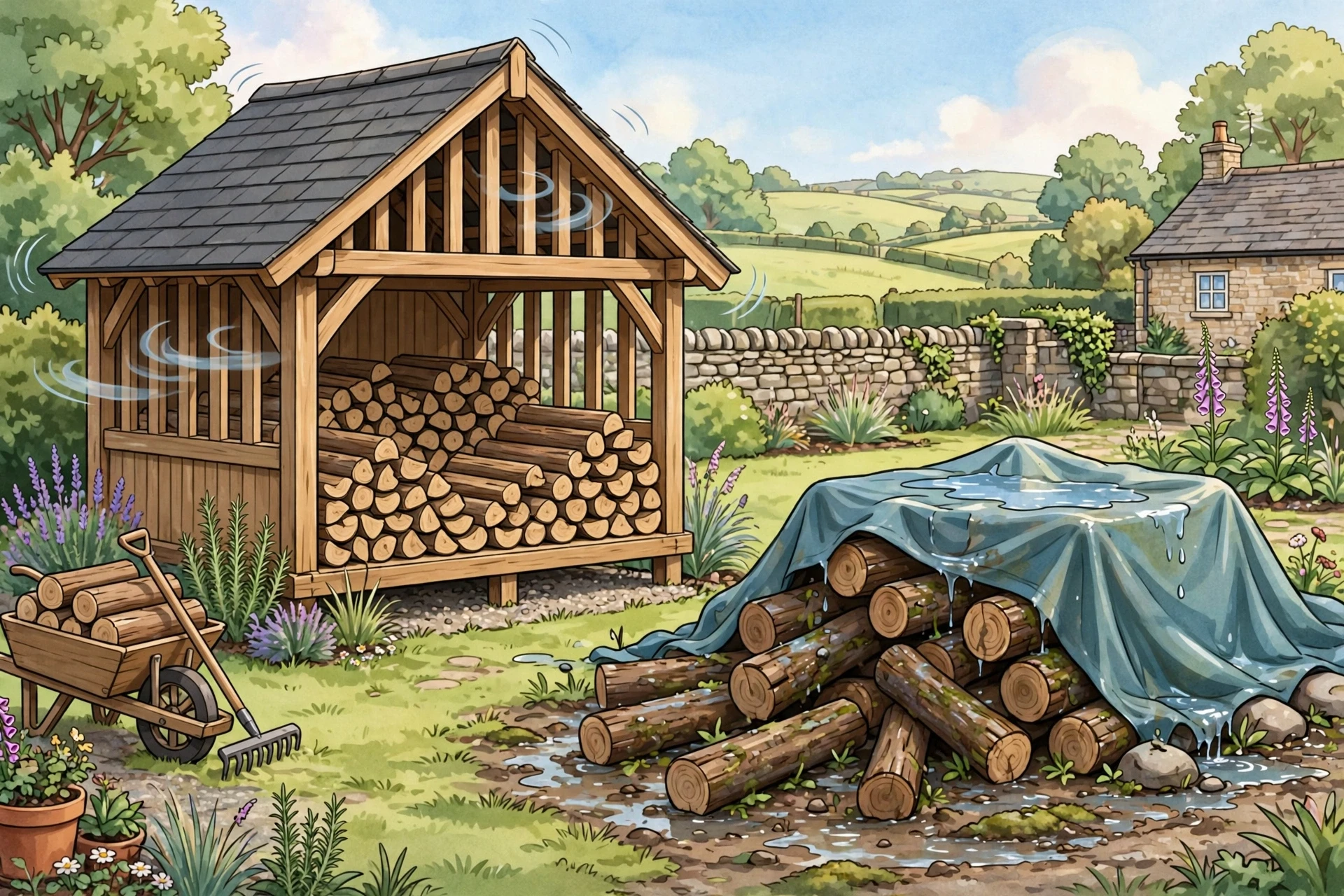
    Open-sided timber log store in Dorset garden
    Open-sided timber log store in Dorset garden

    Airflow is what actually dries your wood

    Freshly cut timber holds a lot of water, and it only seasons properly if air can reach every log. Wind moving through the stack carries moisture away. When you season firewood properly, you want gaps between logs, slatted sides and a raised base so damp air doesn’t pool underneath. A tarpaulin wrapped tight around a pile traps humidity instead, so wood stays wet and grows mould. If you’re planning to build a log store, open sides matter more than anything else, and that’s the same principle we apply on every log store Dorset homeowners ask us about.

    Why dry wood burns cleaner and hotter

    Well-seasoned logs sit below 20% moisture, which is the level the official Ready to Burn rules treat as suitable. Dry wood catches easily, burns hotter and leaves far less tar in your chimney. Wet logs waste heat boiling off water instead of warming the room, so you burn more for less. Whether you want a compact log shed or a larger wood store for the garden, the payoff is the same: a warmer house and a cleaner flue.

    What Makes a Log Store Work: Air, Roof and Ground Contact

    If you want to season firewood properly, follow these rules: keep logs on a raised base off the ground, stack them with gaps for airflow, keep a solid sloping roof on top, and put the closed back of the store towards the prevailing south-westerly weather so wind passes through the slatted sides without driving rain into the stack. Logs are ready to burn once their moisture content drops below 20%.

    Keep the logs off the ground

    Ground contact undoes good storage. Damp soil wicks moisture back into the bottom rows, and those logs grow mould or rot long before you burn them. So build a log store with a raised floor of slats, gravel or paving slabs, with a small gap underneath for air to move.

    The base also helps drainage. Rain splashes and standing water settle around any store, so a few inches of height keeps the lowest logs clear. In damp Purbeck and Wareham gardens, that raised base matters more than people expect.

    Raised log store over gravel drainage
    Raised log store over gravel drainage

    A roof on top, open sides, and the prevailing wind

    Rain falling straight onto a stack keeps wood wet, so the roof should slope to throw water off, with a slight overhang. The sides stay open: slatted boards let wind pass through and carry moisture away. In Dorset, weather mostly arrives from the south-west, so set the store with its back to that weather and the loading face sheltered, and your logs stay drier while the breeze still does its work. That is the core of any good log store Dorset homeowners can rely on, and we build to these rules on every job.

    Sizing Your Log Store for a Season’s Burning

    How big should a log store be? Work it out in four steps: note how many logs you burn in a week, multiply that across your burning months, convert the total into stacked volume, then add space for airflow around every log.

    Roughing out a season’s worth of wood

    How much you burn depends on your stove, your house and how often the fire is lit. A Purbeck cottage lit every evening from October to March gets through far more than a Wareham home burning only at weekends. If you buy by the load or the net, count how many you use in a typical week and multiply up, and ask your supplier what volume a load represents. Whatever your figure, it pays to size a log store generously, because wet winters go through wood faster than you expect.

    Allowing for the space the wood actually takes

    Homeowner stacking split logs in a timber store
    Homeowner stacking split logs in a timber store

    Stacked logs leave gaps, but the true allowance is bigger than that. Aim for roughly twenty per cent spare capacity above your season’s volume, so air moves between rows and you still have room after a top-up delivery. Never fill the store to the roof; logs need ventilation, not a tight squeeze. If you would rather not work the sums out yourself, we build bespoke log stores to suit any garden, sized around how you actually burn.

    Materials, Finishes and Fitting a Log Store to Your Garden

    Timber, metal or brick

    Timber is the usual choice. It’s affordable, easy to work with and suits most Dorset gardens, though it needs regular treatment to cope with our damp coastal air. Metal stores are slim and low maintenance but can drip condensation onto the logs below. Brick is the most durable option and, once built, needs almost no upkeep. If you’d rather have something solid, our bricklaying team can build a store that matches your garden wall.

    Siting, foundations and consent

    Where the store goes matters as much as what it’s made from. Most modest log stores count as outbuildings, so they usually fall under permitted development and don’t need planning permission, provided they meet height and position limits. Your local authority or the Planning Portal can confirm before you build. Set the store on a level, well-drained base – paving slabs on compacted hardcore work well – and leave a clear approach so you can load it easily through a wet Purbeck winter.

    Having a Bespoke Log Store Built in Dorset

    Why bespoke beats a flat-pack

    Flat-pack stores come in fixed sizes, so they rarely fit an awkward corner, a narrow side passage or a Purbeck garden wall line. They often skimp on the two things that matter most: a solid raised base and enough airflow behind and between the logs. A bespoke build lets you match the store to your stack, your stonework and the prevailing south-westerly wind, so the whole thing works instead of just standing there. If your garden has brick walls or stone features worth protecting, it’s worth seeing how our brickwork in Swanage and across Purbeck is finished, because the same care goes into a store.

    How our builds work

    We start with a quick chat about how much wood you burn and where the store will sit. Then we agree a design: open front, sloped roof, gaps for air and a raised floor that keeps damp away. Stores can be built in timber, with brick sides as an option. From Purbeck to Wareham and Swanage, we build to suit your space, so just get in touch for a quote.

    Common Mistakes to Avoid

    Logs on the ground, sides sealed up, roof flat

    Most log store problems come down to three easy fixes. First, never stack logs straight onto soil or grass. Ground moisture creeps up into the bottom layer, so keep a raised base off the ground, even a simple gravel bed or old pallets. Second, resist wrapping the store in solid boards or sheeting to keep rain out. Without airflow the timber cannot season properly, and logs that never get below that 20% moisture target will smoke and tar up your stove. Third, a flat roof pools water. Give it a slope so rain runs off. A well-built bespoke log store solves all three at once.

    Damp logs smoke, tar up your stove and waste heat. A well-built store fixes that. MNM Building Services builds bespoke log stores across Dorset, Purbeck, Wareham and Swanage. Ask us for a friendly, no-pressure quote at MNM Building Services.

    Frequently Asked Questions

    Q1: Why do I need a log store?

    A proper store keeps rain off, lifts logs clear of damp ground and lets air move through the stack. That’s what seasons wood properly, so it burns hotter and leaves less tar in your flue.

    Q2: How big should a log store be?

    Work out how much you burn in a typical week, multiply that across your burning months, then allow roughly twenty per cent spare capacity so air still moves between rows.

    Q3: How do I store logs so they season properly?

    Stack them with gaps on a raised base, roof the top, leave the sides open and keep the closed back of the store towards the prevailing south-westerly weather.

    Q4: Who can build a bespoke log store in Dorset?

    We build bespoke log stores to any size across Dorset, Purbeck, Wareham and Swanage, matched to your garden and how you burn.

    Q5: Do I need planning permission for a log store?

    Most modest stores fall under permitted development as outbuildings, provided they meet height and position limits. Check with your local authority or the Planning Portal first.

    Conclusion

    A good log store comes down to three things: airflow, a solid roof and a raised base off the ground. Turn its back to the prevailing south-westerly weather, size it for a season with a little spare, and your logs will season properly, burning hotter with less tar in the flue. Timber, metal and brick all work, and most modest stores need no planning permission. A bespoke build simply makes those rules fit your garden, whether that is a snug Purbeck corner or a wide Wareham drive. As a local firm covering Poole and the surrounding areas, we build stores to any size, matched to how you actually burn.

  • Storm-Damaged Fencing in Dorset: Repair, Replace or Wind-Proof Before Spring

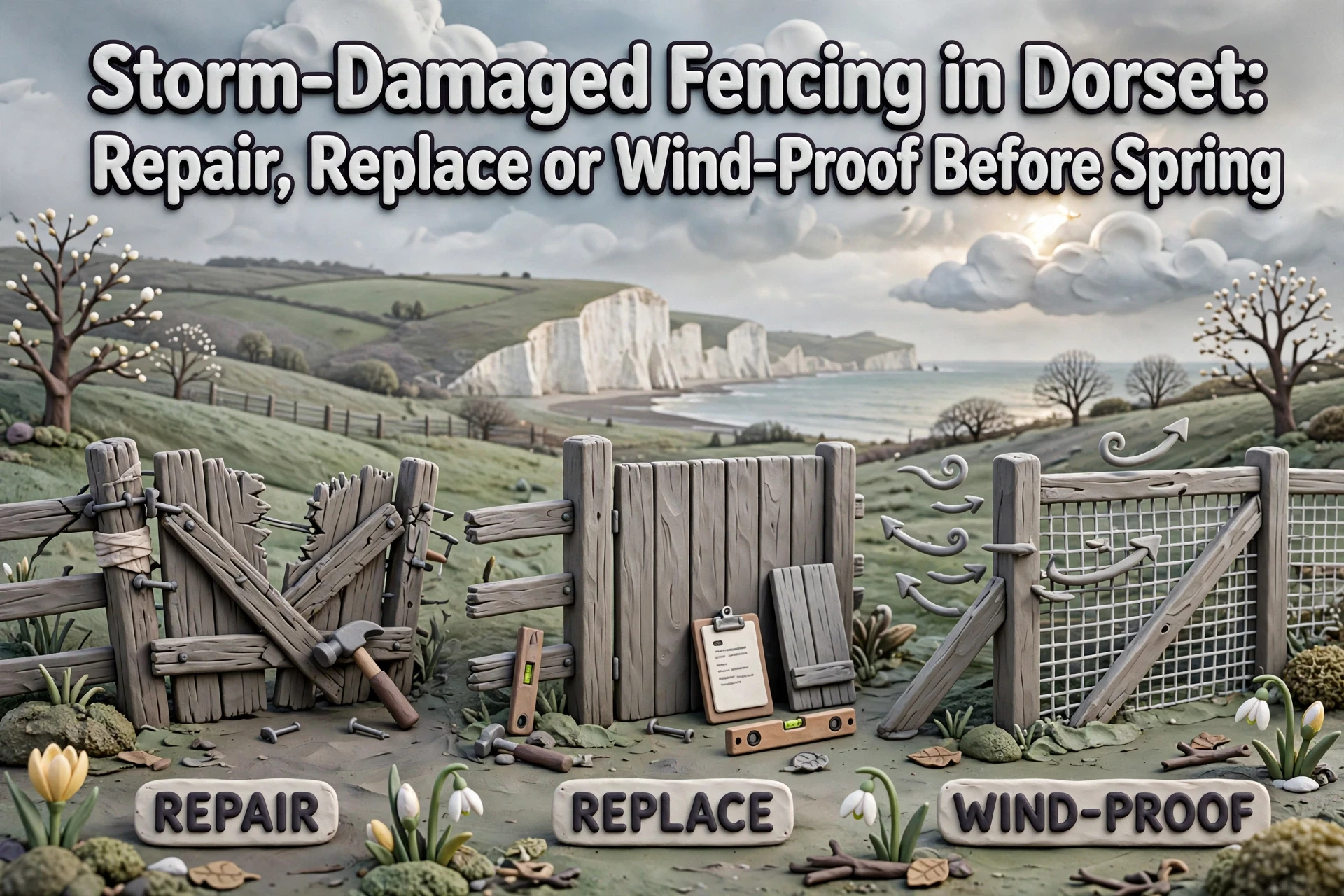
    Storm-Damaged Fencing in Dorset: Repair, Replace or Wind-Proof Before Spring

    Quick Summary: Repair storm-damaged fencing when only one or two panels have failed and the posts remain firm. Replace the run if several posts are rotten, it leans, or repeated winter storms keep breaking it, using deep-set concrete posts, gravel boards, and close-board or featheredge panels that better handle coastal winds. MNM Building Services advises securing dangerous fencing quickly and completing planned work in winter, before spring gales arrive.

    When gales sweep off the coast at Swanage or across open ground near Wareham, one leaning panel can bring a whole run down, and the real question is usually the posts, not the panels. If your fence panels are blown down or the fence posts are rotten, this guide helps you decide between storm damaged fence repair and fence replacement Dorset homes often need, plus wind proof fencing choices for exposed Purbeck gardens. As a local building firm, we fit new fence before spring arrives.

    Repair or Replace: Working Out Which One You Need

    Should you repair or replace a storm damaged fence? Ask three questions:

    • Have just one or two panels failed, or a whole run?
    • Are the posts sound, or rotten at the base?
    • Has the same section been patched before?

    How to Check What Has Actually Failed

    Wobble each post by hand and look where it meets the ground. Rot, movement or a cracked concrete base means the post has failed. Fence panels blown down onto firm posts are a much easier job.

    When a Repair Is Enough

    If one or two panels have come loose but the posts stay firm, storm damaged fence repair is usually enough. A refitted panel, a new gravel board or a quick makesafe often sorts it.

    When Replacement Is the Sensible Option

    Several rotten posts, a leaning run or a fence that fails every winter points to fence replacement Dorset homes really need, especially on exposed Purbeck and Swanage sites. That is the moment to plan wind proof fencing rather than patch again.

    Rotten Posts and Gravel Boards: The Weak Points We See Most

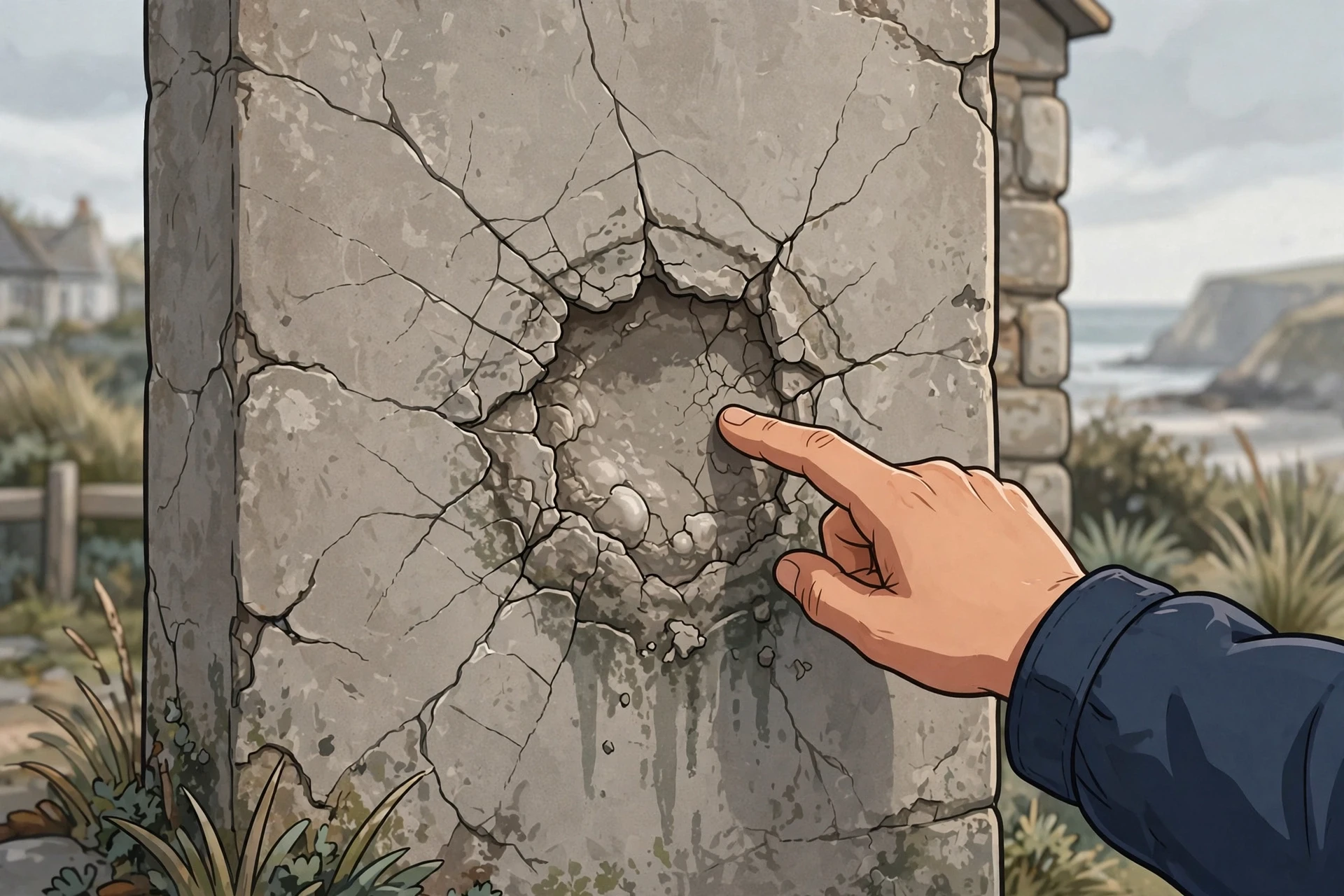
    Rotted fence post beside concrete gravel board
    Rotted fence post beside concrete gravel board

    Spotting Rot in Timber Fence Posts

    Posts rot at ground level, where damp soil sits against the timber and wet never dries out. It’s the main cause when we see fence posts rotten after Dorset’s winter gales. Look for soft, crumbly wood, dark staining or a post that wobbles when pushed. If a storm damaged fence repair would only treat the panel, the rotten post will fail again.

    Gravel Boards and Why They Matter

    A gravel board is a short panel at the bottom of the fence, keeping timber from touching wet soil and soaked grass. On exposed coastal sites from Poole to Swanage, it quietly extends panel life. When gravel boards fail, wind proof fencing and a proper fence replacement Dorset job start there. It matters across fencing Purbeck too.

    Choosing Fencing That Stands Up to the Wind

    Concrete Posts or Timber Posts

    Concrete posts will not rot at ground level, which is where most failures start. They cost more to install but often outlast two or three sets of panels. Timber posts look softer in a Purbeck garden, so treat the base well and keep a gravel board underneath.

    Design Choices That Cope Better With Wind

    You can cut wind damage by planning the fence itself:

    1. Use concrete or well-treated posts, set deep in firm ground
    2. Fit gravel boards so panels sit clear of wet soil
    3. Choose close-board or featheredge panels over solid lap panels
    4. Leave small gaps between boards to let gusts pass through
    5. Shorten runs with piers or gates to break up panel wind load
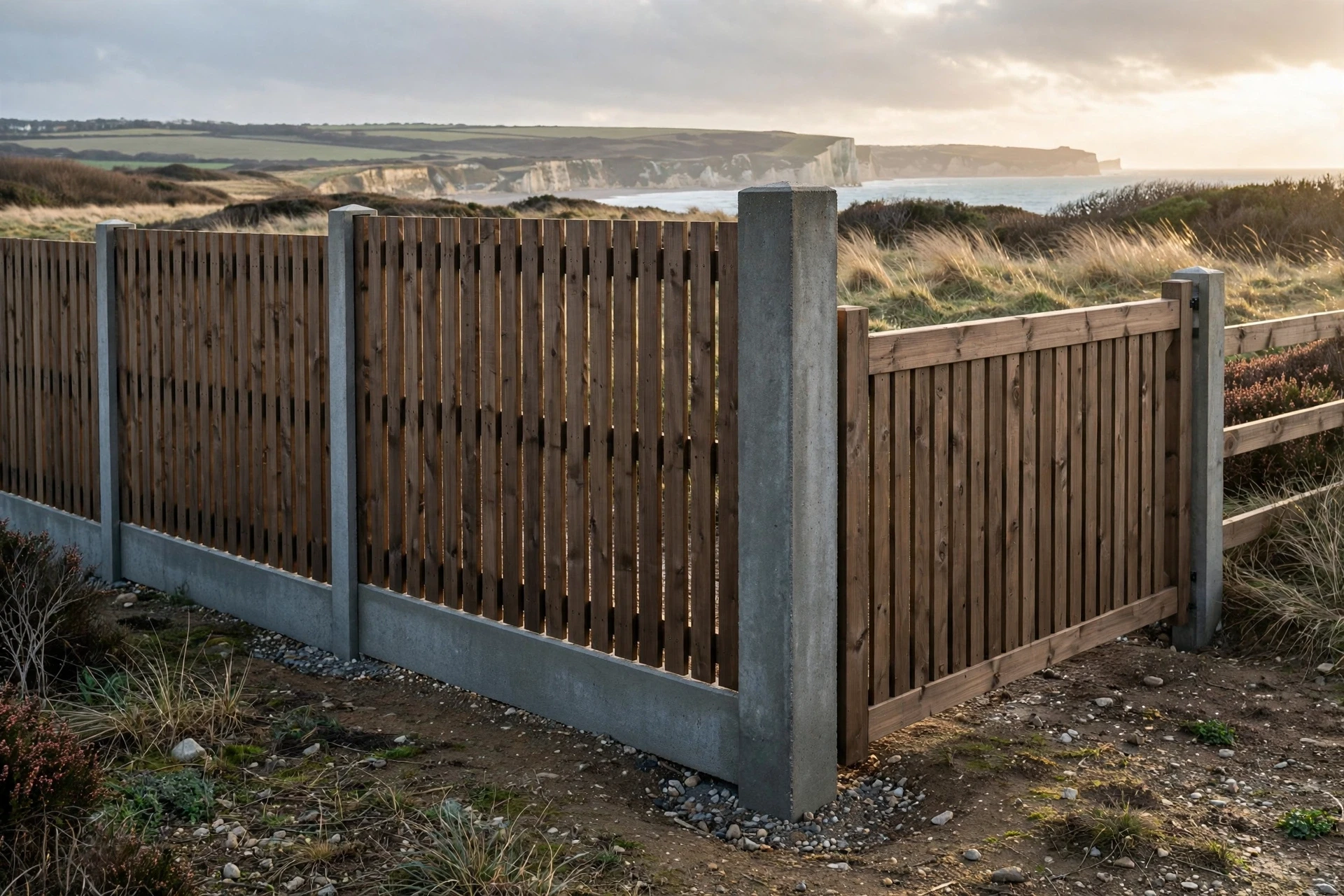
    Close-board fence with concrete posts and gravel boards
    Close-board fence with concrete posts and gravel boards

    We fit fencing like this across Wareham and Swanage, where coastal exposure punishes weak designs. Get the details right now and the fence will still be standing when spring arrives.

    Getting the Work Done Before Spring

    Why Winter Is a Good Time to Book

    Winter is quieter for most Dorset builders, so quotes and materials are easier to arrange. Book repairs or a new run of featheredge fencing now and the work is finished well before spring winds arrive. It also means your garden is ready to use when the weather turns.

    Making Dangerous Fencing Safe Quickly

    A leaning panel or a post rocking in soggy ground can fall without warning. If a fence threatens a path, drive or neighbour’s boundary, get it made safe first. We can secure loose panels and prop or replace rotten posts, then plan a proper fix for spring.

    MNM Building Services homepage
    MNM Building Services homepage

    If a storm has left your fencing leaning or missing panels, talk to MNM Building Services for honest advice and a clear quote. Visit MNM Building Services and get it sorted before spring.

    Frequently Asked Questions

    Q1: Should I repair or replace a storm damaged fence?

    If only one or two panels failed and the posts are firm, a repair is usually enough. Rotten posts or a whole leaning run need fence replacement, so wobble each post base first.

    Q2: How do I make a fence more wind resistant?

    Use concrete posts set deep, fit gravel boards, and choose close-board or featheredge panels. Shorten runs with piers or gates and leave small gaps so gusts pass through.

    Q3: Who can fix a fence in Dorset?

    A local building firm like MNM Building Services can repair panels, replace rotten posts and fit wind-proof fencing across Poole, Purbeck, Wareham and Swanage, with quotes easiest to arrange in winter.

    Conclusion

    Storm damage tells you what a fence is really made of. Firm posts and one or two loose panels usually mean a simple repair. Rotten posts, a leaning run or a fence that fails every winter points to replacement, ideally with concrete posts, gravel boards and close-board panels that cope with coastal exposure. Winter is the quiet season to plan it, so the work is done before spring gales arrive and your garden is ready. We handle fencing across Purbeck, Wareham and Swanage all year round.

  • Winter Storm Prep for Your Garden: What to Tie Down and Cover Up in Dorset

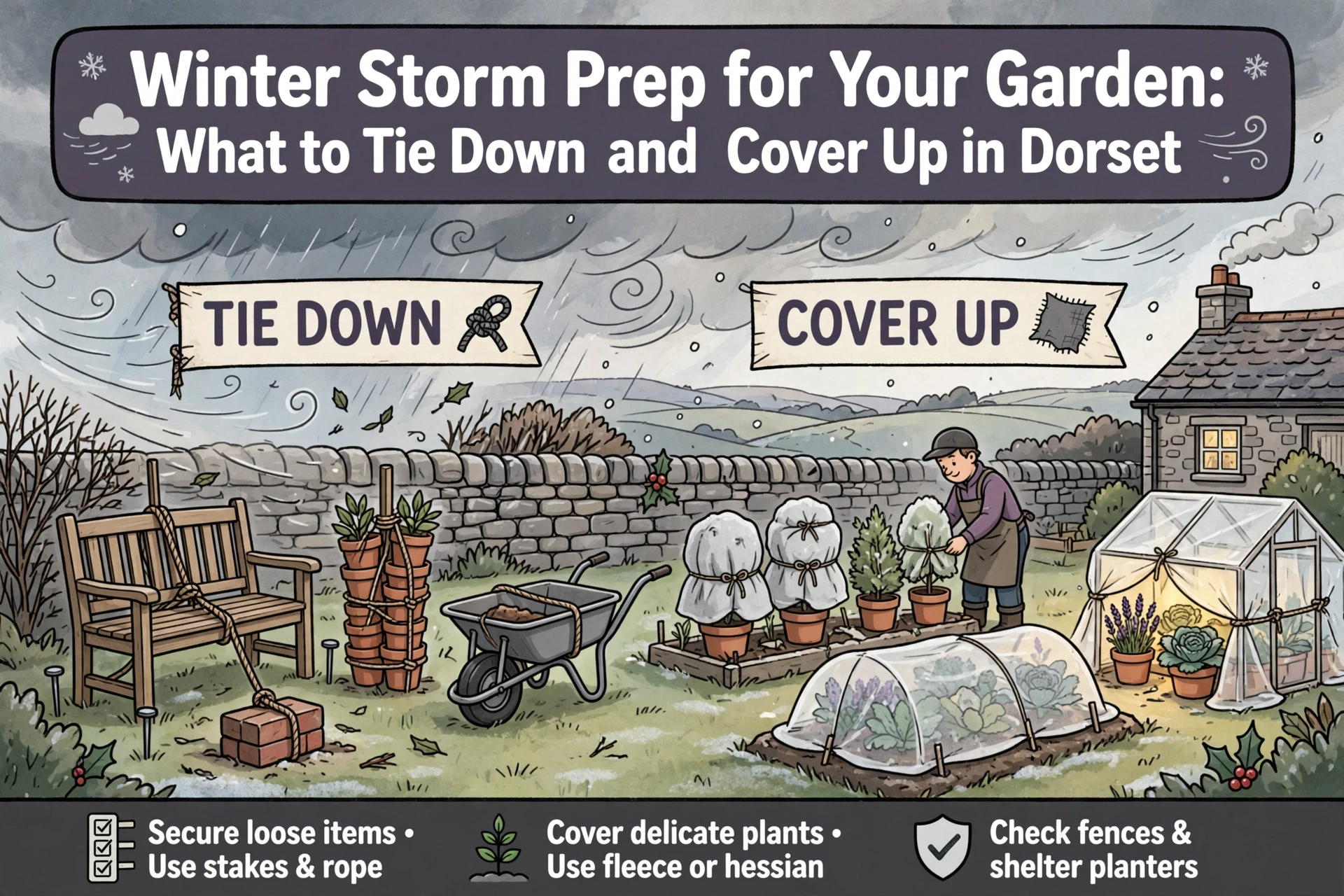
    Winter Storm Prep for Your Garden: What to Tie Down and Cover Up in Dorset

    Quick Summary: Prepare a Dorset garden before winter storms by securing trampolines, furniture, bins, roof felt, gates, and fence panels, while checking fence posts for rotten or shifted footings. Clear gullies and address standing water, which weakens post foundations, and inspect the garden again after the storm for structural damage. MNM Building Services says weak or leaning posts need proper repairs and replacement rather than another temporary fix that will fail in the next gale.

    The night the fencing went down in Swanage, it was not the panels that caused the damage. It was a loose gate post swinging, and a trampoline frame taking the corner off a neighbour’s conservatory roof. Good winter storm garden prep means checking the heavy things, not just the plants. To secure garden before storm weather arrives, walk the garden and tie down trampoline frames, cover garden furniture, bin store lids and log piles, and check for loose fence panels storm wind could lift. As Poole builders, we see the aftermath across Wareham, Swanage and Purbeck, often where a rotting post footing failed first. This guide shows how to protect garden from winter weather, so your garden stands a better chance of staying storm proof in a Dorset gale.

    Step 1: Read the Warning and Walk Your Garden

    Good winter storm garden prep starts before you touch a single fence panel. Check the Met Office weather warnings and the GOV.UK guidance on preparing for storms so you know what’s coming and when. Wind warnings usually arrive a day or two ahead, which gives you enough time to secure garden before storm weather hits. In exposed spots like Swanage and Purbeck, treat any amber warning as your deadline. Then cover garden furniture winter storage can wait no longer for.

    The 15-minute garden walk: what to look for

    Take a slow lap of the garden and note anything the wind can lift, snap or carry. Loose roofing felt on the shed, wobbly fence panels, an unlocked gate and a trampoline with no ground anchor are the usual offenders. Check bins, garden furniture, log piles and anything stacked against the house. Look down too: blocked gullies and standing water show where drainage is struggling. On coastal plots in Poole and Wareham, salt gusts loosen fixings faster, so it pays to protect garden from winter weather early. That quick walk is how you storm proof garden Dorset homes need, and if you spot loose roofing or broken fencing, we can help.

    Step 2: Tie Down and Anchor the Loose Items

    The quickest way to protect your garden from winter weather is to secure anything the wind can lift. A proper winter storm garden prep routine means walking the garden and dealing with:

    Homeowner anchoring trampoline in windswept Dorset garden
    Homeowner anchoring trampoline in windswept Dorset garden
    • Trampolines – flip them or anchor the frame down
    • Garden furniture – stack, weigh down or store it
    • Bins – clip lids and tuck them against a wall
    • Sheds and greenhouses – check fixings and roof felt
    • Log piles and planters – move them somewhere sheltered

    Trampolines, play equipment and climbing frames

    A trampoline acts like a sail. If you cannot store it, tie down trampoline frames with heavy-duty straps and a ground anchor for trampoline kits sold at most garden centres. Swing frames and slides should be checked for loose bolts, then secured or moved into the lee of a wall.

    Sheds, summerhouses and greenhouses

    These take the brunt in exposed spots around Wareham and Purbeck. Check the shed roof felt securing, tighten hinges and door latches, and make sure the base has not shifted. On greenhouses, replace cracked panes and clip loose ones before the next gale.

    Bins, planters, furniture and log piles

    Anything light enough to shift will travel. Wheel bins into a garage or against a sheltered wall and clip the lids shut. Stack chairs and tables, or cover garden furniture winter-style with straps rather than loose sheeting. Move pots into groups against a house wall, and shift log piles under cover so they stay dry and put. If heavy items keep moving or a structure looks unstable, that is a sign the base or fixing needs proper attention.

    Step 3: Cover Up Furniture, Shrubs and Roofs

    Covering furniture and soft landscaping

    To protect garden from winter weather, the quickest wins are covers and shelter. Move chairs, tables and BBQs into the shed or garage, or strap down waterproof covers. To cover garden furniture for winter properly, tuck the cover tight so gales cannot get underneath and lift it. Bring cushions indoors, as damp filling never dries.

    Loose roofing, guttering and roof materials

    Walk the garden and look up. Shed roof felt lifting at the edges, a slipped tile on the porch or a rattling gutter bracket will all tear free in a storm. Clip felt down before the wind finds it. If you spot bigger problems, our guide to roof repair signs in Dorset explains what to check.

    Homeowner securing shed roof felt with clout nails
    Homeowner securing shed roof felt with clout nails

    Shrubs, pots and small trees

    Terracotta pots crack in frost, so bring them against a sheltered wall and wrap in bubble wrap or fleece. Tie young trees to sturdy stakes and prune long branches that catch the wind. It is one more way to secure garden before storm season, especially in exposed spots like Swanage and Purbeck.

    Step 4: Fence Panels, Gates and Outdoor Structures

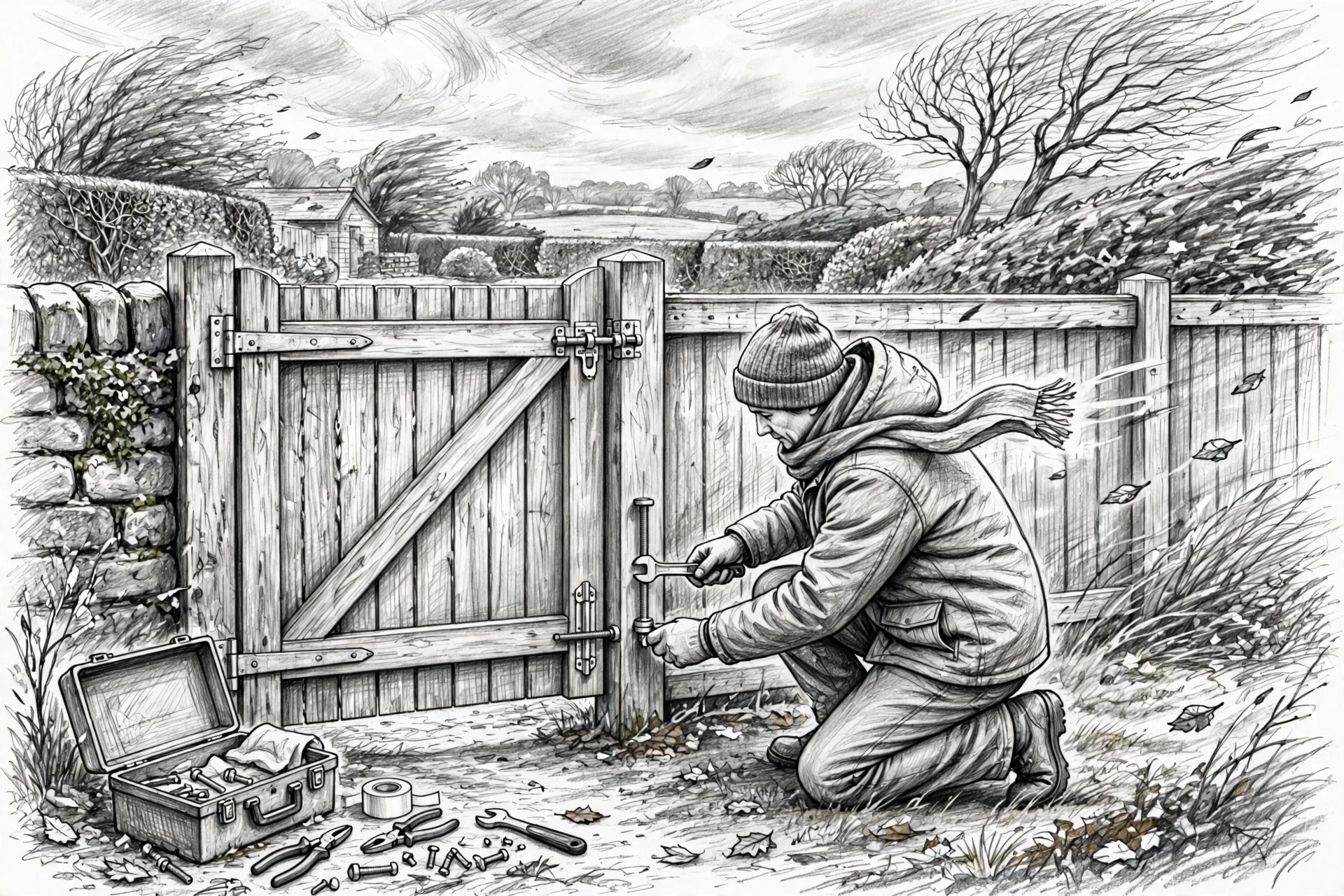
    Fitting a drop bolt to a garden gate
    Fitting a drop bolt to a garden gate

    Checking panels, posts and footings

    Fence panels are usually the first casualty of a Dorset gale. Walk the boundary and shake each post. If it wobbles, the footing has failed or the base is rotten. Look closely at ground level, where wet soil rots timber posts fastest. A loose panel will rattle out of its clips in one strong gust, so refix or lift it off and store it somewhere sheltered until spring.

    Latches, hinges and the gap under the leaf

    Gates do most storm damage when they swing. A gate that can slam all night eventually tears its hinges out of the post. Fit a drop bolt to pin the leaf to the ground, check the latch actually catches, and tighten hinge screws that have worked loose. On exposed plots in Swanage and Purbeck, close the gate against a solid stop so wind cannot force it back on its hinges.

    Decks, pergolas and carports

    Bigger structures rarely blow over, but fixings fail. Check pergola bolts, deck boards and carport roof sheets, and refix anything that lifts. Trim back climbers that catch the wind like a sail. If a structure needs rebuilding to stand up to coastal weather, we can help you plan something sturdier.

    Step 5: Drainage, Water and Winter Weather Around the House

    Clear drains, gutters and water butts

    Blocked gutters spill water down walls, and that damp finds its way into brickwork just as frost arrives. Clear leaves and moss from gutters and downpipes now, then flush each gully at ground level so rain has somewhere to go. Check joints for drips and make sure water butts are empty, as a full butt can freeze and split. RHS advice on waterlogging is worth a read if your garden already holds water.

    Ground, paths and standing water

    Walk the garden after heavy rain and note where puddles sit. Standing water softens the ground around fence posts and shed bases, so it makes storm damage far more likely. A garden fork can break up compacted soil on paths and lawns to help drainage. If water pools against a wall or patio every time, it may point to a drainage problem worth sorting before winter properly sets in.

    Step 6: After the Storm and Common Mistakes to Avoid

    Making safe temporary repairs

    Once the wind drops, walk the garden and check fence panels, gates, shed roofs and anything you tied down. Make the area safe first: lean broken panels against something solid, weight loose sheets, and keep children and pets away from anything hanging or sharp. Temporary fixes like a tarpaulin held with battens will keep water out for a few days. For anything structural, such as a leaning post, a local builder who handles storm damage repairs across Dorset can make it safe properly.

    Mistakes we see every winter

    The biggest one is fixing only what fell. A panel blows out because its post footing has rotted or shifted, so a new panel in the same weak spot will not last long. Others we see: nails instead of proper fixings on shed felt, gates rehung without a drop bolt, and tarps left on for months. Who can repair storm damaged fences in Dorset? Any competent builder or fencing contractor, including us at MNM Building Services, so just ask for a quote.

    MNM Building Services homepage
    MNM Building Services homepage

    If a storm has damaged your fence, roof or garden walls, we can repair it or build something sturdier. Get in touch with MNM Building Services for a friendly, no-pressure quote.

    Frequently Asked Questions

    Q1: How do I prepare my garden for a winter storm?

    Check Met Office warnings first, then walk the garden. Anchor trampolines, stack or cover furniture, clip bin lids, secure shed felt and shake each fence post. Exposed plots in Swanage and Purbeck need extra attention.

    Q2: What should I tie down before high winds?

    Trampolines, garden furniture, bins, log piles and anything loose on shed or greenhouse roofs. Use straps with a ground anchor for trampolines, and refit or store loose fence panels before the gusts arrive.

    Q3: How do I protect garden furniture and sheds in winter?

    Store furniture in a shed or garage where you can, or use strapped-down waterproof covers tucked tight. For sheds, check roof felt, tighten hinges and latches, and confirm the base has not shifted.

    Q4: Who can repair storm damaged fences in Dorset?

    Any competent builder or fencing contractor, including us at MNM Building Services. We repair storm damage across Poole, Wareham and Swanage, and can replace rotted post footings so the same panel does not fail again.

    Q5: Should I fix a leaning fence post myself?

    Straightening one panel is fine, but a wobbly post usually means a rotted or failed footing. That needs digging out and replacing properly, or the next gale will undo your work.

    Conclusion

    Winter storm garden prep comes down to a short list of jobs done before the warnings turn amber. Tie down trampolines, cover garden furniture winter-style and clip bin lids. Check shed roof felt securing, gate latches and drop bolts, and shake every fence post, because a rotted footing is usually the real cause of loose fence panels storm wind lifts. Clear gullies so standing water has somewhere to go, then walk the garden again once the wind drops. Do that and you have a storm proof garden Dorset weather can throw its worst at, wherever you live, from Poole to Swanage and Purbeck.

  • Cracked or Damp Render in Dorset: Fix It This Winter, Re-Render in Spring

    Cracked or Damp Render in Dorset: Fix It This Winter, Re-Render in Spring

    Quick Summary: Cracked or hollow render in Dorset should be inspected in winter, especially where wind-driven rain and freeze-thaw damage worsen problems. Small, isolated defects can be patched, but widespread hollow areas or recurring damp usually require a full re-render to restore grip and weather protection. Winter suits inspection, sealing gaps and clearing gutters, while spring or early autumn provides the mild, dry conditions needed for new render to cure properly.

    A hairline crack on a sheltered wall in Wareham may be nothing to worry about. On a seafront wall in Swanage, where winter wind drives rain straight into the external wall render, that same crack can become damp render and a bigger job within a season. As a Poole firm, we handle rendering Dorset homes trust in exposed coastal weather, from cracked render repair to full house rendering. We will help you judge whether a small render repair will do, or whether it is time to re-render house walls properly – so you can inspect now and book a renderer Purbeck and Dorset homeowners rely on for the milder spring window.

    Why Render Cracks and Where Damp Gets In

    Render rarely fails for one reason. Most cracked render we see around Poole and Purbeck comes down to weather, movement or the way the wall was prepared in the first place.

    • Freeze-thaw damage: water soaks in, freezes, expands and pushes the surface off
    • Wind-driven rain: exposed coastal walls take the worst of the weather
    • Movement and settlement: the wall shifts, the render does not
    • Poor preparation: weak bonding or badly mixed rendering

    Frost, Wind-Driven Rain and Exposed Coastal Walls

    Houses rendering the seafront in Swanage or Wareham take a beating. Rain soaks into hairline cracks, then frost expands the water and blows the render loose. Salt spray makes it worse. It is the classic coastal cycle behind most house rendering problems here.

    Movement, Settlement and Poor Preparation

    Walls move as the ground settles, and rigid render cannot flex, so it cracks along the stress lines. Sometimes the fault lies underneath. Old mortar joints breaking down, or a wall rendered over dust and loose paint, will drag the finish off with it. Cracked render repair that ignores the cause rarely lasts.

    Reading the Signs: Cracks, Hollow Patches and Internal Damp

    Tap the wall. A hollow, drum-like sound means the render has lost its grip. Look for hairline cracks, bulges or stains, then check inside for damp patches, peeling wallpaper or a musty smell. Damp render on the outside often shows up as a cold, wet corner on the inside first.

    Hand tapping cracked render on coastal Dorset house wall
    Hand tapping cracked render on coastal Dorset house wall

    If you are unsure what you are looking at, a quick survey from a local firm like MNM Building Services will tell you whether you need a small patch or a full re-render.

    Repair or Full Re-Render: How to Decide

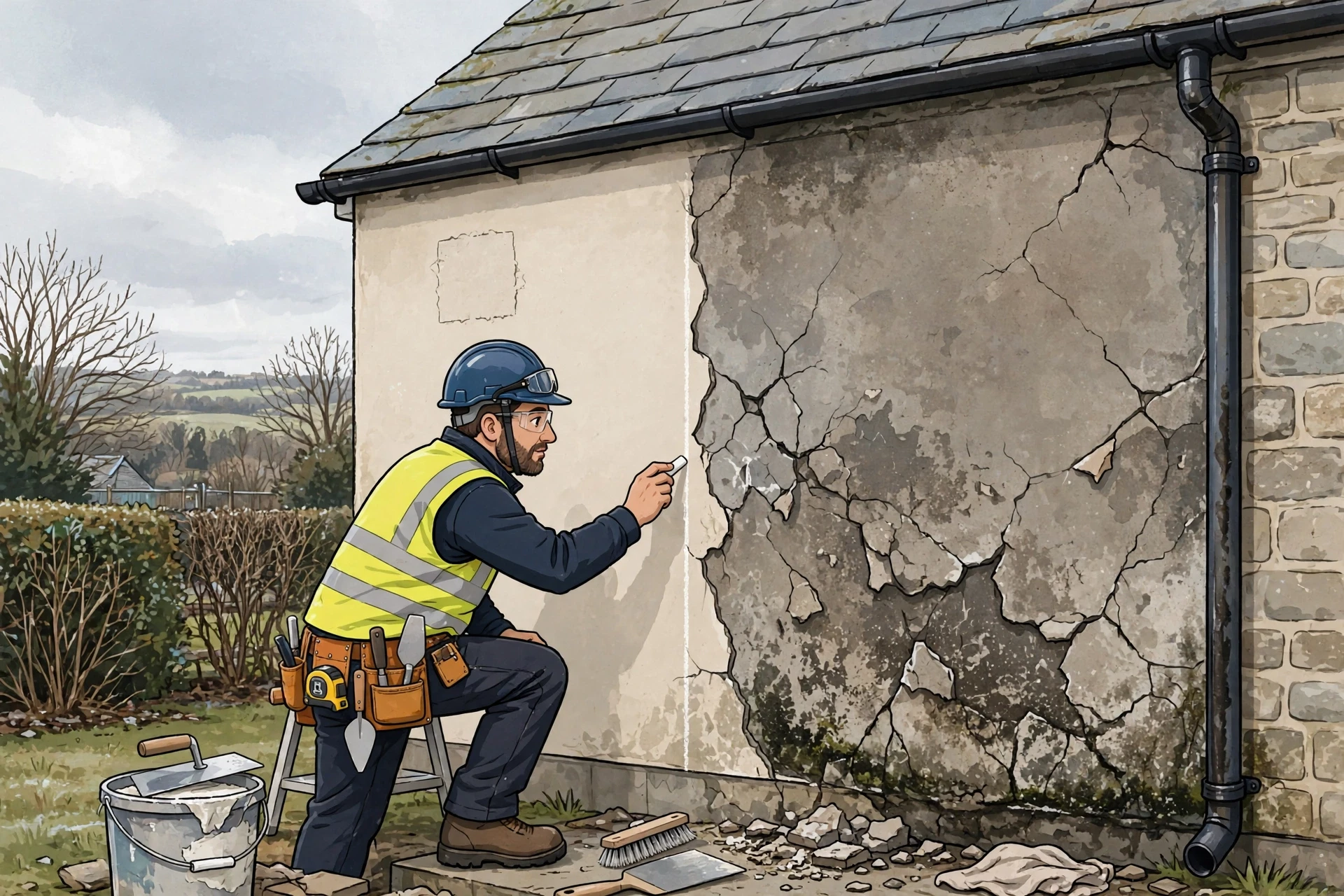
    Can render be patched, or does the wall need stripping back? If the damage is local and the rest of the wall is sound, a cracked render repair will do. If large areas sound hollow or damp keeps returning, a full re-render is the better long-term fix.

    Builder marking render repair boundary on house wall
    Builder marking render repair boundary on house wall

    When a Repair Is the Right Answer

    Small cracks, one hollow patch or a chip by a downpipe usually need patching, not replacing. If the render below is firmly stuck to the wall, we can cut out the loose area and blend in fresh mortar. House rendering often survives decades with occasional small repairs like these.

    When a Full Re-Render Is Worth It

    When whole walls sound drummy, cracks keep reopening, or damp patches spread inside, the render has lost its grip and its weatherproofing. Patches would simply fail next to failing areas. For rendering Dorset homes with exposed coastal weather, stripping back and re-rendering gives a sound, sealed finish.

    Why Winter Is for Inspections and Repairs, Not Full Re-Rendering

    A new coat of render needs mild, dry, frost-free weather, so spring and early autumn suit rendering Dorset walls best. Winter damp and frost stop fresh render from curing properly.

    What Can Be Done in Winter

    You can still inspect walls for cracks and hollow patches, book a spring slot, and carry out small repairs such as sealing gaps or clearing gutters.

    Why Spring Is the Better Time for a New Coat

    Once temperatures rise and drying days return, a full re-render bonds and cures as it should. Booking now means your home is ready when the weather turns, and our team can plan the work around you.

    What a Fresh Coat of Render Gives Your Home

    Weatherproofing, Appearance and Kerb Appeal

    New external wall render does three jobs at once. It sheds the rain that drives in off the Purbeck coast, covers old cracks and patchy repairs, and gives the whole house a cleaner, brighter look. A fresh, even finish also helps the walls breathe properly, so moisture escapes instead of sitting behind the surface. For homes in Wareham, Swanage and along the coast, that added weather protection is worth having before another wet winter.

    Planning Your Next Step

    Winter is the time to inspect and plan. Render needs mild, dry, frost-free weather to cure well, so book now and the work can start in spring when conditions are right.

    MNM Building Services homepage
    MNM Building Services homepage

    Spotted cracks or damp patches on your render? Get it checked this winter and book spring work early. MNM Building Services offers friendly, honest quotes across Poole and Purbeck. Get in touch today.

    Frequently Asked Questions

    Q1: Why is my render cracking?

    Freeze-thaw damage, wind-driven rain, wall movement and poor preparation are the usual causes. On exposed coastal walls, water soaks into hairline cracks, then frost expands it and blows the render loose.

    Q2: Can render be repaired or does it need replacing?

    If the damage is small and the rest sounds solid, patching works. If large areas sound hollow or damp keeps returning, a full re-render is the lasting fix.

    Q3: When is the best time of year to render a house?

    Spring and early autumn suit rendering best. New render needs mild, dry, frost-free weather to cure properly, so inspect in winter and book your spring slot early.

    Q4: What does hollow-sounding render mean?

    A drum-like sound when you tap the wall means the render has lost its grip. That area will eventually crack or fall away, so get it checked soon.

    Conclusion

    Cracked or damp render usually starts small, so winter is the time to find it. Tap walls for hollow patches, watch inside for damp, and decide between a patch and a full re-render house walls need before spring. For rendering Dorset homes face against coastal weather, a fresh external coat keeps the rain out and looks sharper. Inspect now, book early, and your walls will be ready when milder weather arrives.

  • Storm-Damaged Garden Walls in Dorset: Repair, Rebuild and Repoint Before Spring

    Storm-Damaged Garden Walls in Dorset: Repair, Rebuild and Repoint Before Spring

    Quick Summary: Storm-damaged garden walls should be assessed carefully, especially if they lean, bulge, crack or shed loose bricks, and people and pets should stay clear until the danger is checked. An upright wall with sound footings and cracks under 5mm may only need repointing, while shifted brickwork usually requires rebuilding. Repointing, repairing copings and matching the mortar to the brick help keep rain and frost out, so booking work during winter can prevent delays before spring.

    After a wet, windy spell in Dorset, a storm damaged wall can look wrong in a single afternoon: cracks in the mortar, a leaning garden wall, or loose bricks on the grass. This guide shows when crumbling mortar needs brick wall repair in Dorset, when a full garden wall rebuild is wiser, and how repointing brick wall joints helps. As bricklayer Purbeck, Wareham and Swanage homeowners trust, we see this every winter.

    Step 1: Spot the Warning Signs and Make the Wall Safe

    Leaning brick wall, cracked mortar and slipped coping
    Leaning brick wall, cracked mortar and slipped coping

    How do I know if my garden wall is unsafe?

    A storm damaged wall usually shows one or more of these warning signs:

    • It leans, tilts or bulges, or the bricks pull away from each other
    • Wide or stepped cracks run through joints or bricks
    • Loose or fallen bricks, or crumbling mortar you can scrape with a thumb
    • The wall head or coping has slipped, letting rain soak in
    • Frost damaged brickwork, with faces flaking off in layers

    Any lean or bulge means keep well clear until someone checks it. We offer brick wall repair in Dorset, and a quick look tells us whether a garden wall rebuild or a simpler fix is the honest answer.

    What to do in the days straight after a storm

    Keep children and pets away from the wall, especially near a leaning garden wall. Don’t pull off loose bricks or push bulging brickwork back. Photograph the damage for insurance, then get it assessed before the next storm does more harm.

    Step 2: Repair or Rebuild – Deciding the Right Approach

    Should I repair or rebuild a damaged brick wall?

    Repair if the wall is upright with cracks under 5mm and mostly sound mortar. Rebuild when it leans, bulges, or the brickwork has shifted along its length. For most storm damaged wall cases in Dorset, honest brick wall repair beats a full garden wall rebuild on cost, so long as the footings and wall head are sound. Our bricklaying team can tell you which applies within one visit.

    Builder marking leaning brickwork with level
    Builder marking leaning brickwork with level

    Why brick suits boundary walls in Dorset

    Brick handles salty coastal air and wet winters better than most alternatives, and damaged sections are straightforward to match and rebuild. That flexibility is why brick wall repair Dorset wide remains the sensible choice for boundaries in Wareham and Swanage, where many walls are old but worth keeping.

    Step 3: Repointing, Copings and Keeping Damp Out

    What is repointing and when is it needed?

    Repointing means raking out failed mortar and refilling the joints with fresh mix. It is needed when mortar is crumbling, cracked or washed out, because loose joints let rain soak in and freeze. If your wall is upright with sound bricks, repointing is often the only brick wall repair Dorset walls actually need.

    Why the top of the wall matters so much

    Most decay starts at the wall head. A damaged coping or cracked flaunching lets water run straight into the wall, so frost works from the top down. Fixing copings and wall head details matters as much as the joints below, and it is a core part of proper brick wall repair Dorset homes rely on through winter.

    Matching mortar to the brick

    Older bricks are softer than modern cement, so a hard mortar mix can trap moisture and spall the brick faces. We match the mix to the wall, which is where careful brick wall repair Dorset really shows. See our brickwork and repointing work in Wareham for examples.

    Step 4: Getting the Work Booked Through Winter for Spring

    Why winter is a good time to book

    Most people wait until spring, which means good bricklayers fill up fast. Booking now secures your place in the diary, gives time to agree the right repair, and lets work start as soon as the weather turns.

    Next steps for Dorset homeowners and landlords

    If your garden wall in Purbeck, Wareham or Swanage is leaning, cracked or losing mortar, our brickwork team can assess it and advise on boundary and planning matters where they apply. Send a photo, and we’ll come back with a clear quote.

    MNM Building Services homepage
    MNM Building Services homepage

    Not sure whether your garden wall needs a repair or a rebuild? We can take a look and give you an honest quote. Get in touch with MNM Building Services and sort it before spring.

    Frequently Asked Questions

    Q1: How do I know if my garden wall is unsafe?

    Watch for a lean, bulge, stepped cracks, loose bricks or mortar you can scrape away. Any lean means keep clear and get it checked.

    Q2: Should I repair or rebuild a damaged brick wall?

    Repair if the wall stands upright with cracks under 5mm and sound footings. Rebuild when brickwork has shifted or the wall head has failed.

    Q3: What is repointing and when is it needed?

    Repointing refills failed mortar joints with a matched mix. It is needed when joints crumble or wash out, letting rain and frost in.

    Q4: Can frost damage be repaired?

    Yes. Flaking brick faces can be cut out and replaced with matched bricks, once the copings above are fixed so water stops getting in.

    Conclusion

    Storm damage rarely needs a rushed decision. Start with the warning signs: a lean, stepped cracks, crumbling mortar or a slipped coping. Repair suits an upright wall with sound footings, while a garden wall rebuild makes sense once the brickwork has shifted. Fix the wall head first, match the mortar to the brick, and book through winter so the work is done before spring arrives.

  • Winter Roof Checks in Dorset: What to Look For Before and After a Storm

    Winter Roof Checks in Dorset: What to Look For Before and After a Storm

    Quick Summary: Inspect your Dorset roof from the ground after winter storms, using binoculars or phone zoom to spot slipped tiles, cracked ridges, lifted flashing, blocked gutters and sagging gutters. Check indoors too, because new ceiling stains, damp patches, mould or daylight in the loft can reveal leaks that are invisible from outside. Call a professional roofer promptly for damage to tiles, flashing, flat roofs or the roof deck, as wind-driven rain and freeze-thaw can quickly turn small faults into costly repairs. MNM Building Services offers inspections and repairs across Poole, Wareham, Swanage and wider Purbeck.

    The night the gales came in from the west, a chimney stack in Swanage lost a ridge tile. The owner never saw it go. Two days later, a brown ring appeared on the landing ceiling, and a small job had turned into a bigger one.

    That is the trouble with winter roof damage. From ground level, a storm damaged roof often looks fine, yet one slipped tile or cracked piece of flashing lets in water with every bout of wind-driven rain. We see it across Poole, Wareham and Purbeck every winter, when a leaking roof turns freeze-thaw into real repair bills.

    This guide covers a simple winter roof check you can do from the ground, the indoor clues worth acting on, and when to call us for roof repairs in Dorset.

    Step 1: Check Your Roof from the Ground, Not the Ladder

    The best winter roof check starts with your feet firmly on the ground. A storm damaged roof is unsafe to walk on, especially when tiles are wet or loose, and most problems show up from below anyway.

    The Safety Line: Stay Off the Roof

    Please don’t climb up, whatever the temptation. Wet slate and tile offer little grip, and a fall from even a single-storey roof can be life-changing. Use binoculars or the zoom on your phone instead. If something looks wrong, that’s the moment to call a roofer Purbeck or Poole householders trust, not to fetch a ladder.

    A Ground-Level Walk-Round

    Walk right round the house and work through a simple list. A full winter roof check takes ten minutes and needs no tools:

    • Slipped roof tiles, or a ragged line along the slope
    • Cracked or missing ridge tiles along the top
    • Flashings lifting at the chimney or abutments
    • Sagging gutters, blocked downpipes and damp fascias
    • Debris on the ground: mortar, tile fragments, grit

    Our guide to signs your roof needs repair covers each of these in more detail.

    What Storm Damage Looks Like on a Dorset Roof

    Dorset weather is hard on roofs. Gales in Wareham and along the exposed Purbeck coast lift tiles and drive rain sideways under them. After a storm, look for slipped roof tiles, a ridge line that looks uneven, and flashing pulling away from the chimney. If roof flashing repair is needed, or ridge tile repair, we can help – and roof repairs Dorset wide are easier to book before the next blow arrives.

    Step 2: Look Closely at Ridge Tiles, Flashings and Chimneys

    Roofer inspecting chimney flashing on a Dorset home
    Roofer inspecting chimney flashing on a Dorset home

    Ridge Tiles and Mortar Beds

    Ridge tiles sit along the top of the roof, so they take the full force of coastal wind from Wareham to Swanage. Look for tiles that have slipped, tilted or dropped out of line. Gaps in the mortar bed underneath are a warning too. Freeze-thaw damage works into those cracks, and each frost makes them wider, which is why a small ridge fault often becomes a storm damaged roof repair.

    Flashing, Chimneys and Valleys

    Flashings are the lead or metal strips where the roof meets a wall, chimney or valley. From the ground, check for pieces lifted, torn or pulling away, and for mortar joints around the chimney that look crumbled or washed out. Chimney flashing repair is one of the most common calls we get after winter gales, because wind-driven rain finds any gap fast. Valleys matter just as much: moss and debris build up there, holding water against the roof.

    Use binoculars or your phone’s zoom. Please never climb up to inspect, even on a calm day.

    Flat Roofs, Porch Roofs and Extensions

    Flat roofs on porches, garages and extensions need a quick look too. Watch for ponding, blisters or splits in the covering, as any of these can turn into a leaking roof winter problem. If you would rather have a professional eye check things over, our team handles roof repairs Dorset-wide, and we are happy to take a look.

    Step 3: Check Gutters, Downpipes and Fascias

    Gutters do the quiet work of carrying storm water away from your roof and walls. When they fail, water spills where it should not, and in winter that water finds its way into the roofline. A quick look from the ground tells you a lot.

    What to Look For in the Gutters

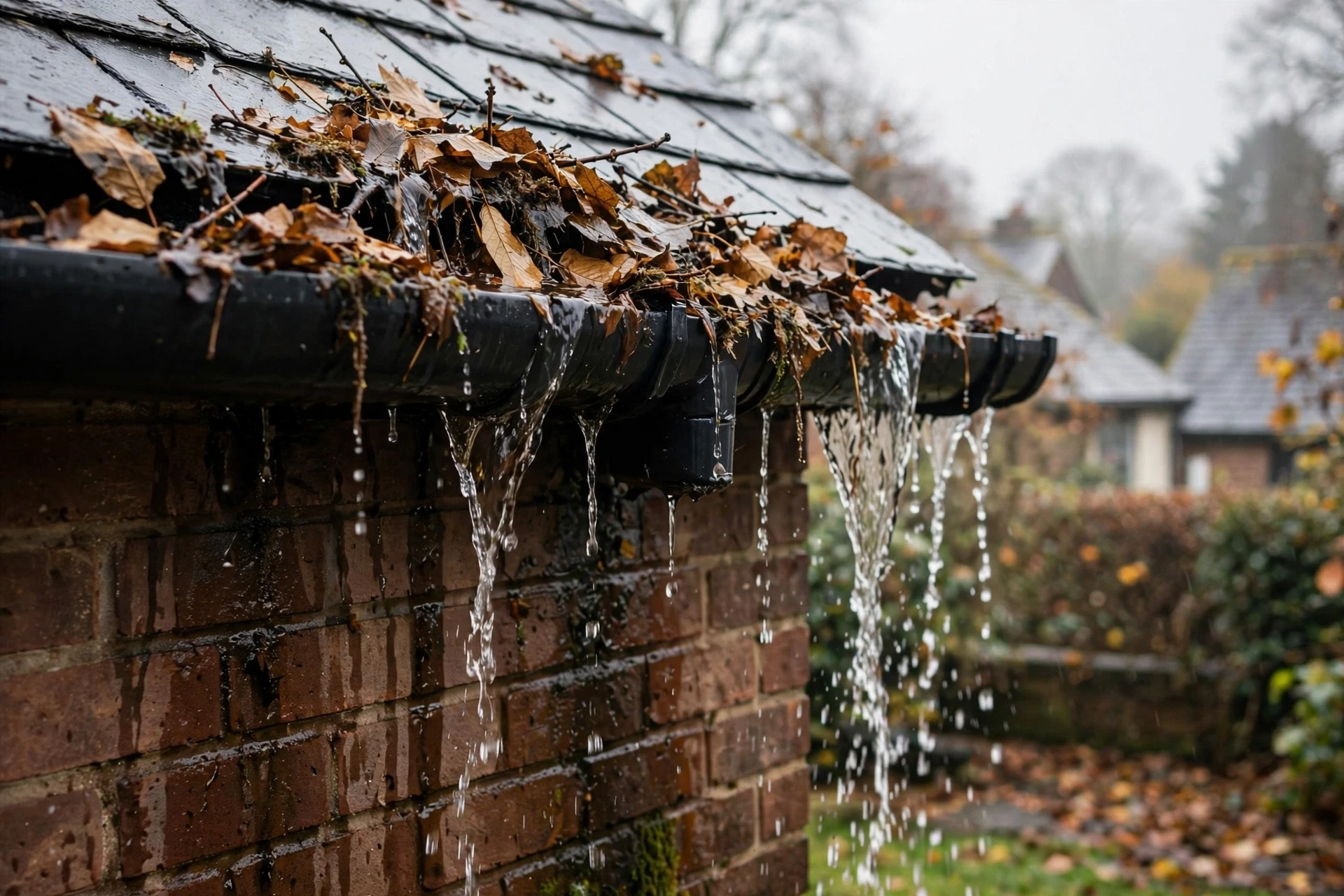
    Walk the outside of the house and watch for overflow during rain, water marks running down the wall, or plants growing from the gutter itself. Sagging sections, gaps at the joints and drips at the brackets all point to trouble. Blocked gutters and downpipes are common after autumn leaves and winter gales, especially in leafy Wareham streets. If water stands still in a gutter after heavy rain, the fall has dropped or the outlet is blocked.

    Overflowing gutter drips onto brick wall
    Overflowing gutter drips onto brick wall

    Fascias, Soffits and Downpipes

    Check the fascias and soffits for peeling paint, soft patches or bird nests, since rotting timber behind the gutter is a classic entry point for damp. Make sure downpipes are fixed firmly and discharge into the drains, not down the wall. Homes along the exposed Purbeck coast near Swanage take a beating from salt and gales, so joints loosen faster there. If you spot roof repairs Dorset homeowners often pair with guttering work, we can inspect the whole roofline together.

    Step 4: Look for Signs of a Leaking Roof Inside the Home

    A leaking roof winter problem often shows up indoors first. Look for these signs:

    • Yellow-brown stains or rings on ceilings
    • Damp patches on walls, especially after rain
    • Peeling paint or bubbling plaster near the eaves
    • A musty smell or black mould in corners
    • Daylight showing through the roof in the loft

    Ceiling Stains, Damp Patches and Mould

    Check the ceilings below bathrooms and above any sloping roof. A stain that grows after heavy rain usually means water is getting in above. Keep an eye on upstairs corners too, where damp often collects first.

    Brown water stain spreading beneath bedroom attic hatch
    Brown water stain spreading beneath bedroom attic hatch

    Loft and Attic Checks

    Pop into the loft with a torch after a storm. Look for wet or darkened timbers, damp insulation, water marks on the underside of the roof and daylight at joints. In exposed spots around Wareham and Swanage, wind-driven rain can push through small gaps that a dry-day check would miss. If you spot sagging on the roof deck, get it looked at quickly. If you find mould on timbers, we can trace the cause.

    Matching the Symptom to the Cause

    Where the stain sits is a clue. A patch near a chimney usually points to flashing. Stains in a corner often mean a slipped tile or a blocked gutter overflowing. Water along the eaves suggests a gutter, fascia or soffit problem. Photograph everything, because buildings insurance claims go far more smoothly with dated photos of the damage.

    Step 5: Why Small Roof Faults Get Costlier in Winter

    Saturated Roofs and Driving Rain

    A cracked tile or tired flashing is easy to ignore in July. Winter changes the maths. Storms off the Channel hit Wareham and Swanage with wind-driven rain, which pushes water sideways under slipped tiles and into gaps a summer shower would never reach. Once the felt and battens get soaked, the damage spreads well past the original fault. That is why a leak on a storm damaged roof in December often becomes a bigger job by February.

    Freeze-Thaw, Ice and Unsafe Working Conditions

    Cold weather adds a second problem. Water that has crept into a hairline crack freezes, expands and widens it, so one slipped tile can loosen its neighbours over a few frosty nights. Frozen felt and iced-up gutters also make a roof more fragile to walk on. That is why roof repairs in Swanage and the wider area are best sorted before the hard frosts, not attempted from a ladder in a winter gale.

    Step 6: What to Do Next and When to Call a Roofer in Purbeck

    Call a roofer after a storm if you spot any of the following:

    • Slipped or missing tiles, or a cracked ridge tile
    • Damaged flashing around a chimney or valley
    • A new damp patch or stain on a ceiling
    • Guttering hanging loose or pulling away
    • Anything that looks like a sagging roof deck

    Until then, work from the ground.

    What You Can Safely Do Yourself

    Use binoculars or your phone’s zoom to check tiles, flashings and gutters from ground level. Look inside at ceilings, walls and the loft for damp patches or daylight coming through. Photograph anything you find so you can compare after the next storm.

    When It Needs a Professional Roofer

    Anything on the roof itself needs a trained roofer with the right access and safety kit. In exposed Purbeck spots such as Swanage and Wareham, wind-driven rain finds every small gap, so small faults grow quickly. Storm damage involving slate, tile, flashing or a flat roof should never become a do-it-yourself job.

    Documenting Damage and Getting a Quote

    Keep dated photos and notes together for buildings insurance documentation. Then ask for a clear written quote covering the make-safe repairs and the full fix. For roof repairs Dorset homeowners can rely on, we are happy to inspect and quote.

    MNM Building Services homepage
    MNM Building Services homepage

    Spotted a slipped tile or a damp patch after the storm? MNM Building Services can inspect and repair your roof before winter weather makes it worse. Get in touch for a free quote.

    Frequently Asked Questions

    Q1: How do I check my roof for storm damage?

    Stay on the ground and walk right round the house. Use binoculars or your phone’s zoom to look for slipped tiles, uneven ridge lines, lifted flashing and sagging gutters, then photograph anything unusual.

    Q2: What are the signs of a leaking roof?

    Watch for yellow-brown ceiling stains, damp patches after rain, peeling paint near the eaves, musty smells and daylight in the loft. A patch near the chimney often points to flashing rather than tiles.

    Q3: Should I repair slipped tiles myself?

    No. Wet or loose tiles give no grip, and freeze-thaw makes roofs fragile in winter. Stay off the roof entirely and call a roofer with proper access equipment and safety kit.

    Q4: Who can repair a roof in Dorset?

    Look for an established local firm with clear written quotes. MNM Building Services inspects and repairs roofs across Poole, Wareham, Swanage and the wider Purbeck area, covering tiles, flashing, ridge tiles and flat roofs.

    Q5: When should I call a roofer after a storm?

    Call promptly if you spot missing tiles, damaged flashing, a new damp patch, loose guttering or any sagging on the roof deck. Booking repairs before the next gale stops small faults spreading.

    Conclusion

    A winter roof check comes down to three habits: stay on the ground, use binoculars or your phone’s zoom, and look indoors as well as up. Slipped roof tiles, tired flashing and blocked gutters all show themselves from ground level, and the loft tells you the rest. In exposed spots like Wareham and Swanage, wind-driven rain turns small faults into big ones fast. If something looks wrong, sort it before the next gale. For roof repairs Dorset homeowners can count on, our roofing services cover tiles, ridge lines, flashing and flat roofs.