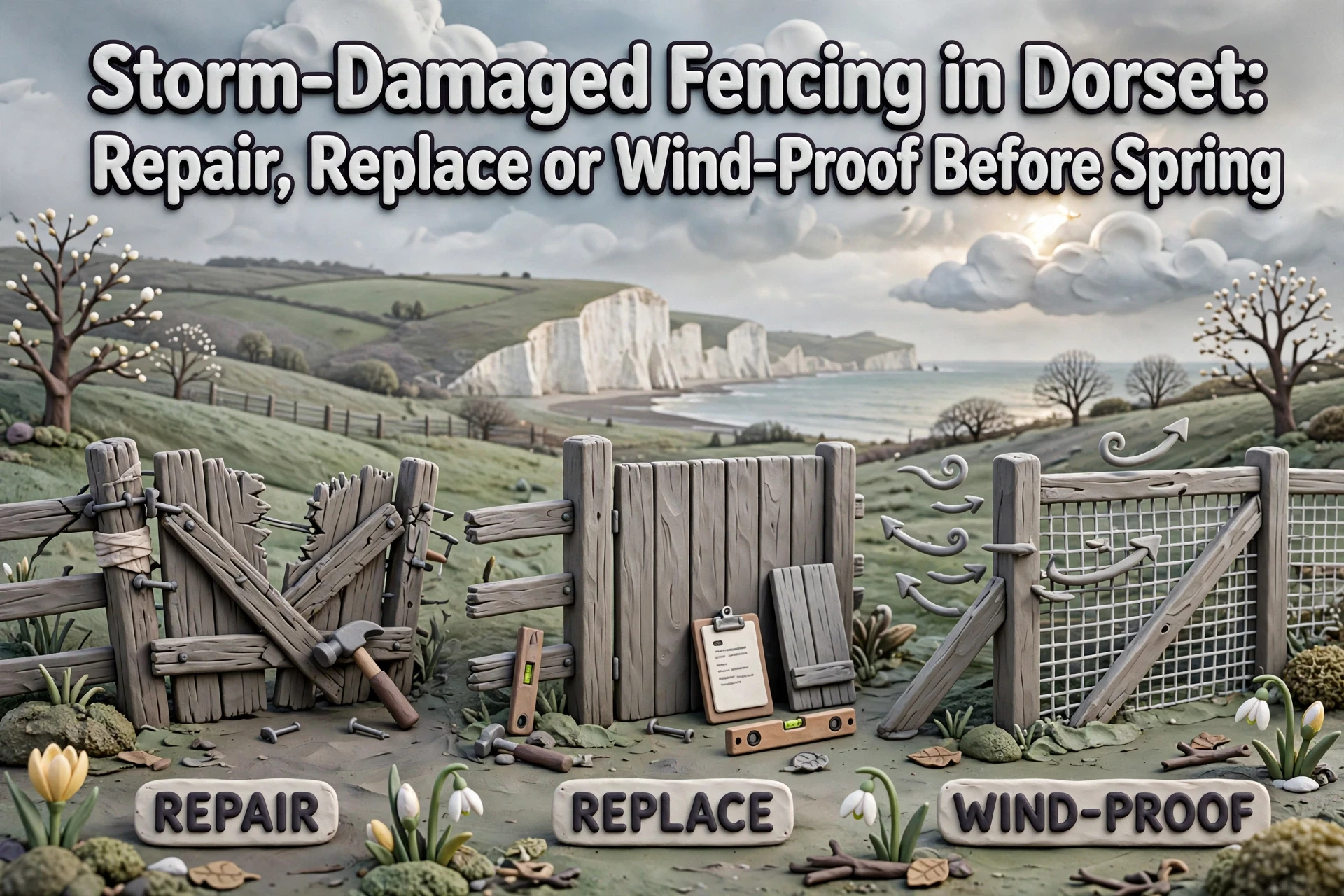
Quick Summary: Repair storm-damaged fencing when only one or two panels have failed and the posts remain firm. Replace the run if several posts are rotten, it leans, or repeated winter storms keep breaking it, using deep-set concrete posts, gravel boards, and close-board or featheredge panels that better handle coastal winds. MNM Building Services advises securing dangerous fencing quickly and completing planned work in winter, before spring gales arrive.
When gales sweep off the coast at Swanage or across open ground near Wareham, one leaning panel can bring a whole run down, and the real question is usually the posts, not the panels. If your fence panels are blown down or the fence posts are rotten, this guide helps you decide between storm damaged fence repair and fence replacement Dorset homes often need, plus wind proof fencing choices for exposed Purbeck gardens. As a local building firm, we fit new fence before spring arrives.
Repair or Replace: Working Out Which One You Need
Should you repair or replace a storm damaged fence? Ask three questions:
- Have just one or two panels failed, or a whole run?
- Are the posts sound, or rotten at the base?
- Has the same section been patched before?
How to Check What Has Actually Failed
Wobble each post by hand and look where it meets the ground. Rot, movement or a cracked concrete base means the post has failed. Fence panels blown down onto firm posts are a much easier job.
When a Repair Is Enough
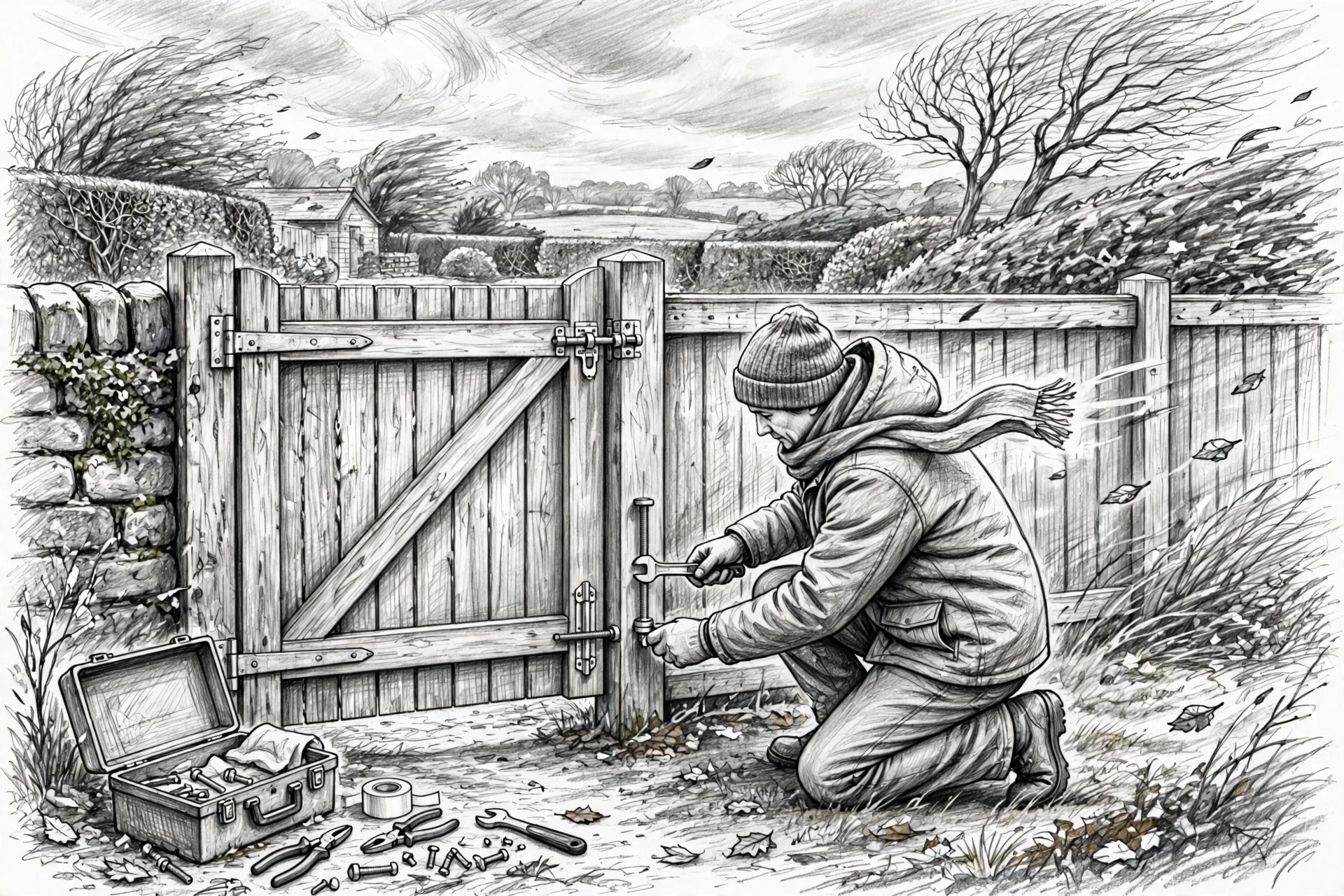
If one or two panels have come loose but the posts stay firm, storm damaged fence repair is usually enough. A refitted panel, a new gravel board or a quick makesafe often sorts it.
When Replacement Is the Sensible Option
Several rotten posts, a leaning run or a fence that fails every winter points to fence replacement Dorset homes really need, especially on exposed Purbeck and Swanage sites. That is the moment to plan wind proof fencing rather than patch again.
Rotten Posts and Gravel Boards: The Weak Points We See Most
Spotting Rot in Timber Fence Posts
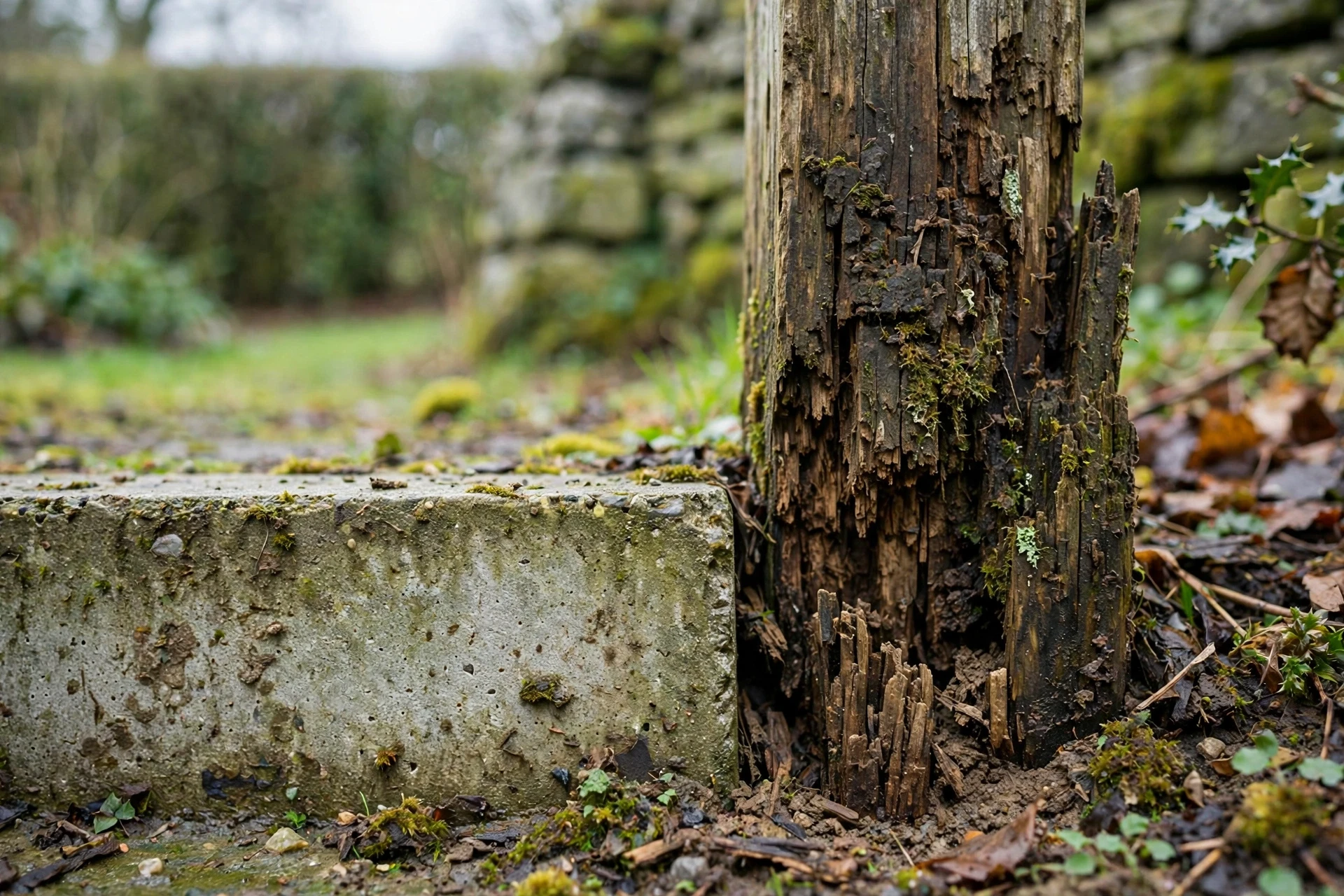
Posts rot at ground level, where damp soil sits against the timber and wet never dries out. It’s the main cause when we see fence posts rotten after Dorset’s winter gales. Look for soft, crumbly wood, dark staining or a post that wobbles when pushed. If a storm damaged fence repair would only treat the panel, the rotten post will fail again.
Gravel Boards and Why They Matter
A gravel board is a short panel at the bottom of the fence, keeping timber from touching wet soil and soaked grass. On exposed coastal sites from Poole to Swanage, it quietly extends panel life. When gravel boards fail, wind proof fencing and a proper fence replacement Dorset job start there. It matters across fencing Purbeck too.
Choosing Fencing That Stands Up to the Wind
Concrete Posts or Timber Posts
Concrete posts will not rot at ground level, which is where most failures start. They cost more to install but often outlast two or three sets of panels. Timber posts look softer in a Purbeck garden, so treat the base well and keep a gravel board underneath.
Design Choices That Cope Better With Wind
You can cut wind damage by planning the fence itself:
- Use concrete or well-treated posts, set deep in firm ground
- Fit gravel boards so panels sit clear of wet soil
- Choose close-board or featheredge panels over solid lap panels
- Leave small gaps between boards to let gusts pass through
- Shorten runs with piers or gates to break up panel wind load
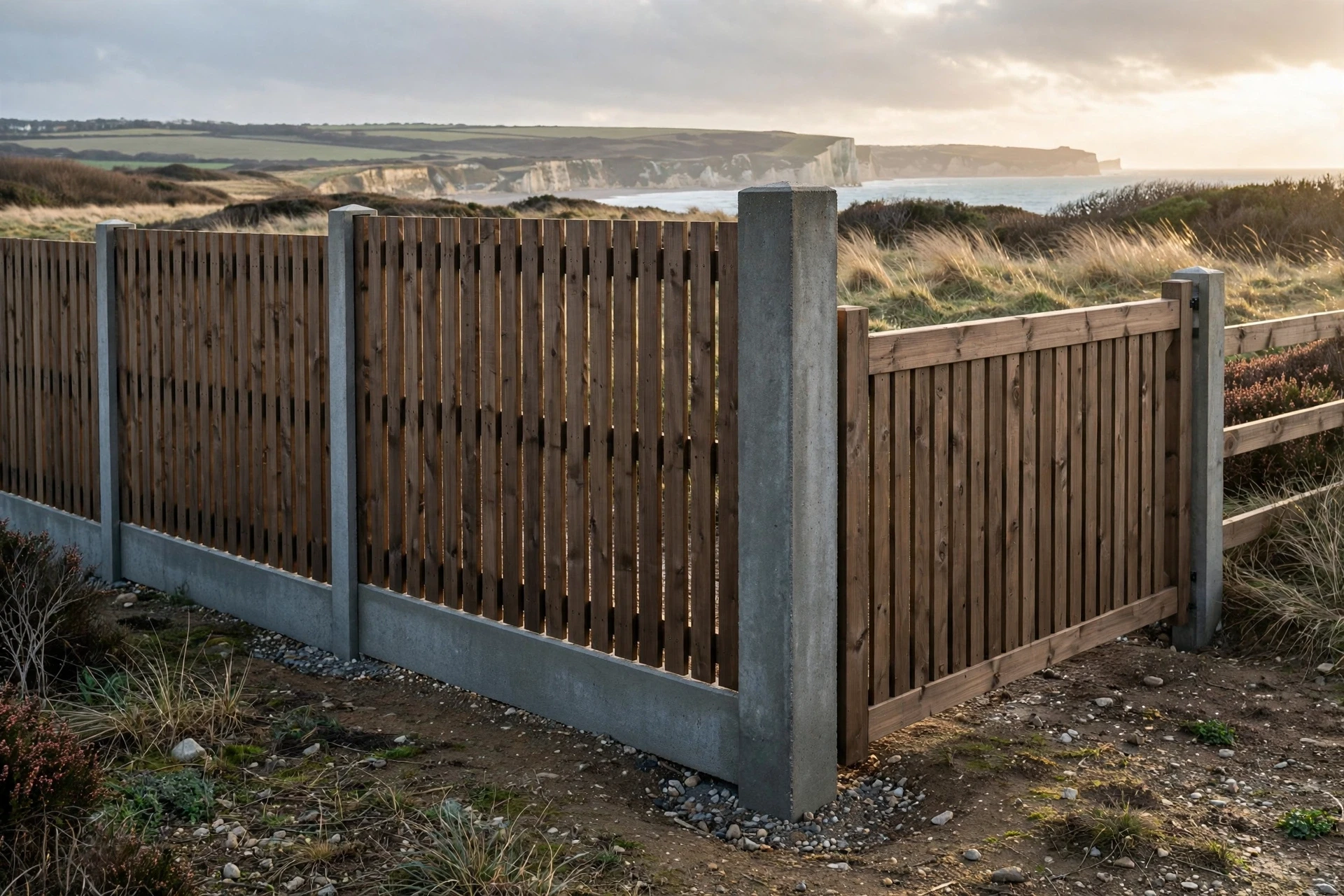
We fit fencing like this across Wareham and Swanage, where coastal exposure punishes weak designs. Get the details right now and the fence will still be standing when spring arrives.
Getting the Work Done Before Spring
Why Winter Is a Good Time to Book
Winter is quieter for most Dorset builders, so quotes and materials are easier to arrange. Book repairs or a new run of featheredge fencing now and the work is finished well before spring winds arrive. It also means your garden is ready to use when the weather turns.
Making Dangerous Fencing Safe Quickly
A leaning panel or a post rocking in soggy ground can fall without warning. If a fence threatens a path, drive or neighbour’s boundary, get it made safe first. We can secure loose panels and prop or replace rotten posts, then plan a proper fix for spring.

If a storm has left your fencing leaning or missing panels, talk to MNM Building Services for honest advice and a clear quote. Visit MNM Building Services and get it sorted before spring.
Frequently Asked Questions
Q1: Should I repair or replace a storm damaged fence?
If only one or two panels failed and the posts are firm, a repair is usually enough. Rotten posts or a whole leaning run need fence replacement, so wobble each post base first.
Q2: How do I make a fence more wind resistant?
Use concrete posts set deep, fit gravel boards, and choose close-board or featheredge panels. Shorten runs with piers or gates and leave small gaps so gusts pass through.
Q3: Who can fix a fence in Dorset?
A local building firm like MNM Building Services can repair panels, replace rotten posts and fit wind-proof fencing across Poole, Purbeck, Wareham and Swanage, with quotes easiest to arrange in winter.
Conclusion
Storm damage tells you what a fence is really made of. Firm posts and one or two loose panels usually mean a simple repair. Rotten posts, a leaning run or a fence that fails every winter points to replacement, ideally with concrete posts, gravel boards and close-board panels that cope with coastal exposure. Winter is the quiet season to plan it, so the work is done before spring gales arrive and your garden is ready. We handle fencing across Purbeck, Wareham and Swanage all year round.