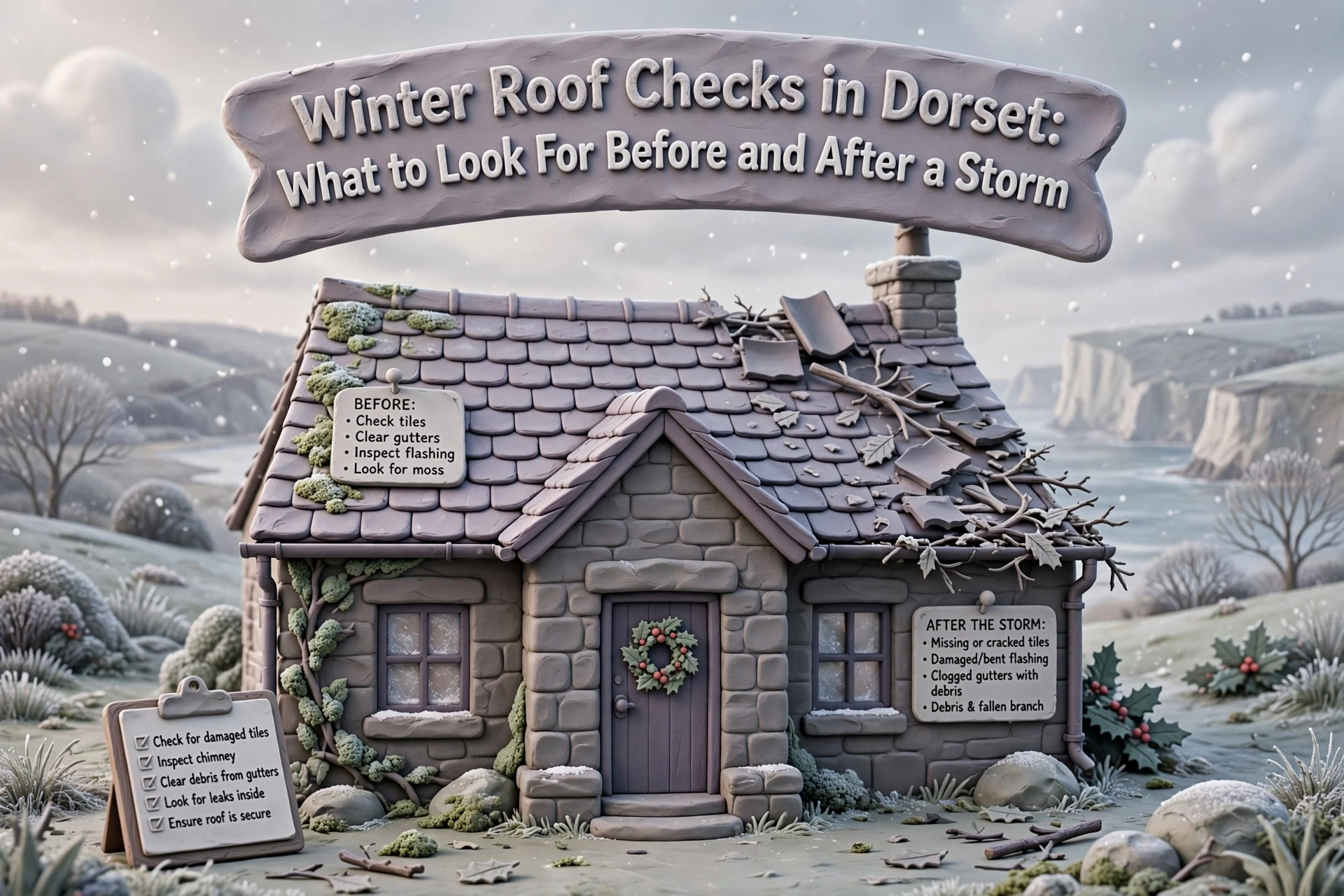
Quick Summary: Inspect your Dorset roof from the ground after winter storms, using binoculars or phone zoom to spot slipped tiles, cracked ridges, lifted flashing, blocked gutters and sagging gutters. Check indoors too, because new ceiling stains, damp patches, mould or daylight in the loft can reveal leaks that are invisible from outside. Call a professional roofer promptly for damage to tiles, flashing, flat roofs or the roof deck, as wind-driven rain and freeze-thaw can quickly turn small faults into costly repairs. MNM Building Services offers inspections and repairs across Poole, Wareham, Swanage and wider Purbeck.
The night the gales came in from the west, a chimney stack in Swanage lost a ridge tile. The owner never saw it go. Two days later, a brown ring appeared on the landing ceiling, and a small job had turned into a bigger one.
That is the trouble with winter roof damage. From ground level, a storm damaged roof often looks fine, yet one slipped tile or cracked piece of flashing lets in water with every bout of wind-driven rain. We see it across Poole, Wareham and Purbeck every winter, when a leaking roof turns freeze-thaw into real repair bills.
This guide covers a simple winter roof check you can do from the ground, the indoor clues worth acting on, and when to call us for roof repairs in Dorset.
Step 1: Check Your Roof from the Ground, Not the Ladder
The best winter roof check starts with your feet firmly on the ground. A storm damaged roof is unsafe to walk on, especially when tiles are wet or loose, and most problems show up from below anyway.
The Safety Line: Stay Off the Roof
Please don’t climb up, whatever the temptation. Wet slate and tile offer little grip, and a fall from even a single-storey roof can be life-changing. Use binoculars or the zoom on your phone instead. If something looks wrong, that’s the moment to call a roofer Purbeck or Poole householders trust, not to fetch a ladder.
A Ground-Level Walk-Round
Walk right round the house and work through a simple list. A full winter roof check takes ten minutes and needs no tools:
- Slipped roof tiles, or a ragged line along the slope
- Cracked or missing ridge tiles along the top
- Flashings lifting at the chimney or abutments
- Sagging gutters, blocked downpipes and damp fascias
- Debris on the ground: mortar, tile fragments, grit
Our guide to signs your roof needs repair covers each of these in more detail.
What Storm Damage Looks Like on a Dorset Roof
Dorset weather is hard on roofs. Gales in Wareham and along the exposed Purbeck coast lift tiles and drive rain sideways under them. After a storm, look for slipped roof tiles, a ridge line that looks uneven, and flashing pulling away from the chimney. If roof flashing repair is needed, or ridge tile repair, we can help – and roof repairs Dorset wide are easier to book before the next blow arrives.
Step 2: Look Closely at Ridge Tiles, Flashings and Chimneys
Ridge Tiles and Mortar Beds
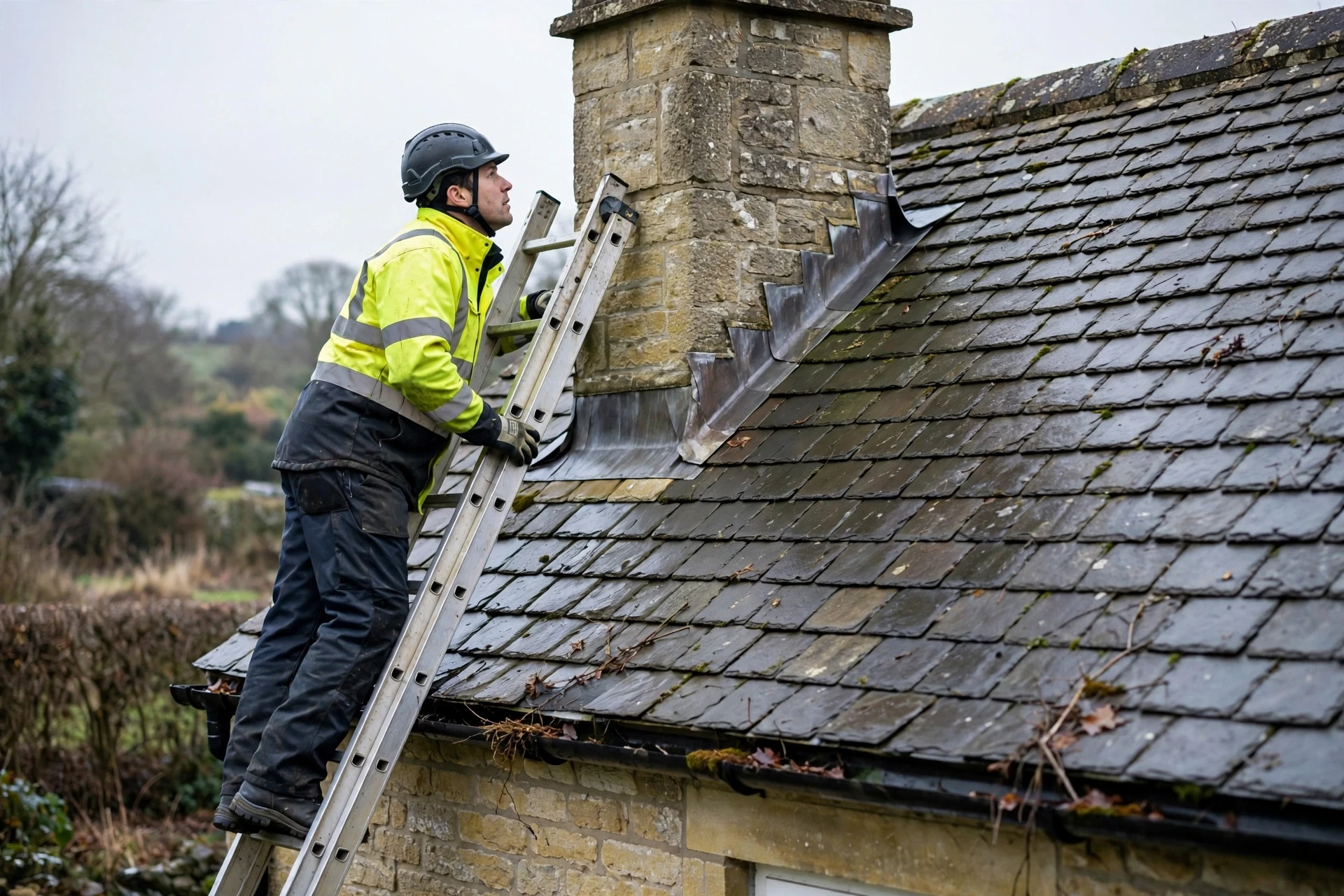
Ridge tiles sit along the top of the roof, so they take the full force of coastal wind from Wareham to Swanage. Look for tiles that have slipped, tilted or dropped out of line. Gaps in the mortar bed underneath are a warning too. Freeze-thaw damage works into those cracks, and each frost makes them wider, which is why a small ridge fault often becomes a storm damaged roof repair.
Flashing, Chimneys and Valleys
Flashings are the lead or metal strips where the roof meets a wall, chimney or valley. From the ground, check for pieces lifted, torn or pulling away, and for mortar joints around the chimney that look crumbled or washed out. Chimney flashing repair is one of the most common calls we get after winter gales, because wind-driven rain finds any gap fast. Valleys matter just as much: moss and debris build up there, holding water against the roof.
Use binoculars or your phone’s zoom. Please never climb up to inspect, even on a calm day.
Flat Roofs, Porch Roofs and Extensions
Flat roofs on porches, garages and extensions need a quick look too. Watch for ponding, blisters or splits in the covering, as any of these can turn into a leaking roof winter problem. If you would rather have a professional eye check things over, our team handles roof repairs Dorset-wide, and we are happy to take a look.
Step 3: Check Gutters, Downpipes and Fascias
Gutters do the quiet work of carrying storm water away from your roof and walls. When they fail, water spills where it should not, and in winter that water finds its way into the roofline. A quick look from the ground tells you a lot.
What to Look For in the Gutters
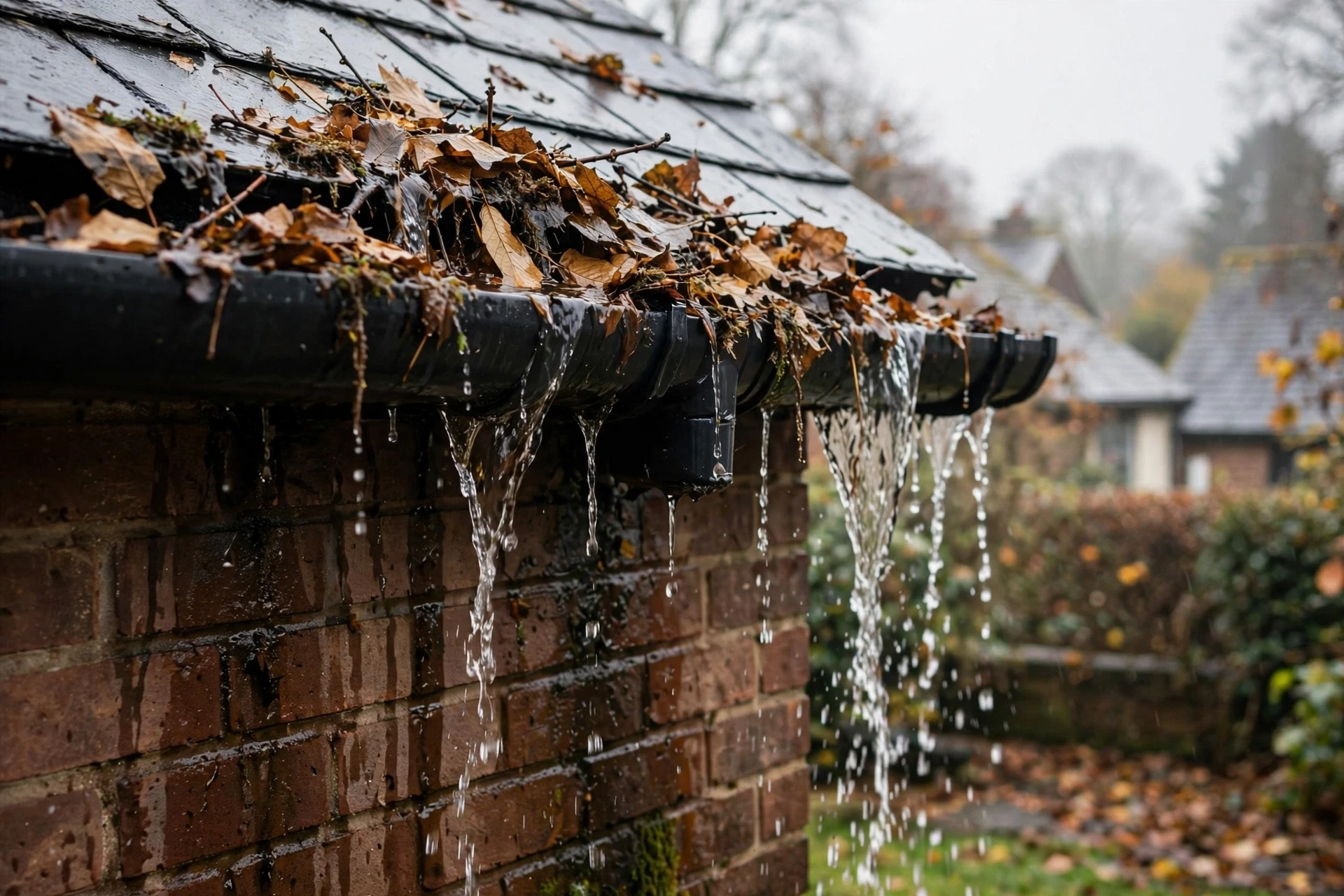
Walk the outside of the house and watch for overflow during rain, water marks running down the wall, or plants growing from the gutter itself. Sagging sections, gaps at the joints and drips at the brackets all point to trouble. Blocked gutters and downpipes are common after autumn leaves and winter gales, especially in leafy Wareham streets. If water stands still in a gutter after heavy rain, the fall has dropped or the outlet is blocked.
Fascias, Soffits and Downpipes
Check the fascias and soffits for peeling paint, soft patches or bird nests, since rotting timber behind the gutter is a classic entry point for damp. Make sure downpipes are fixed firmly and discharge into the drains, not down the wall. Homes along the exposed Purbeck coast near Swanage take a beating from salt and gales, so joints loosen faster there. If you spot roof repairs Dorset homeowners often pair with guttering work, we can inspect the whole roofline together.
Step 4: Look for Signs of a Leaking Roof Inside the Home
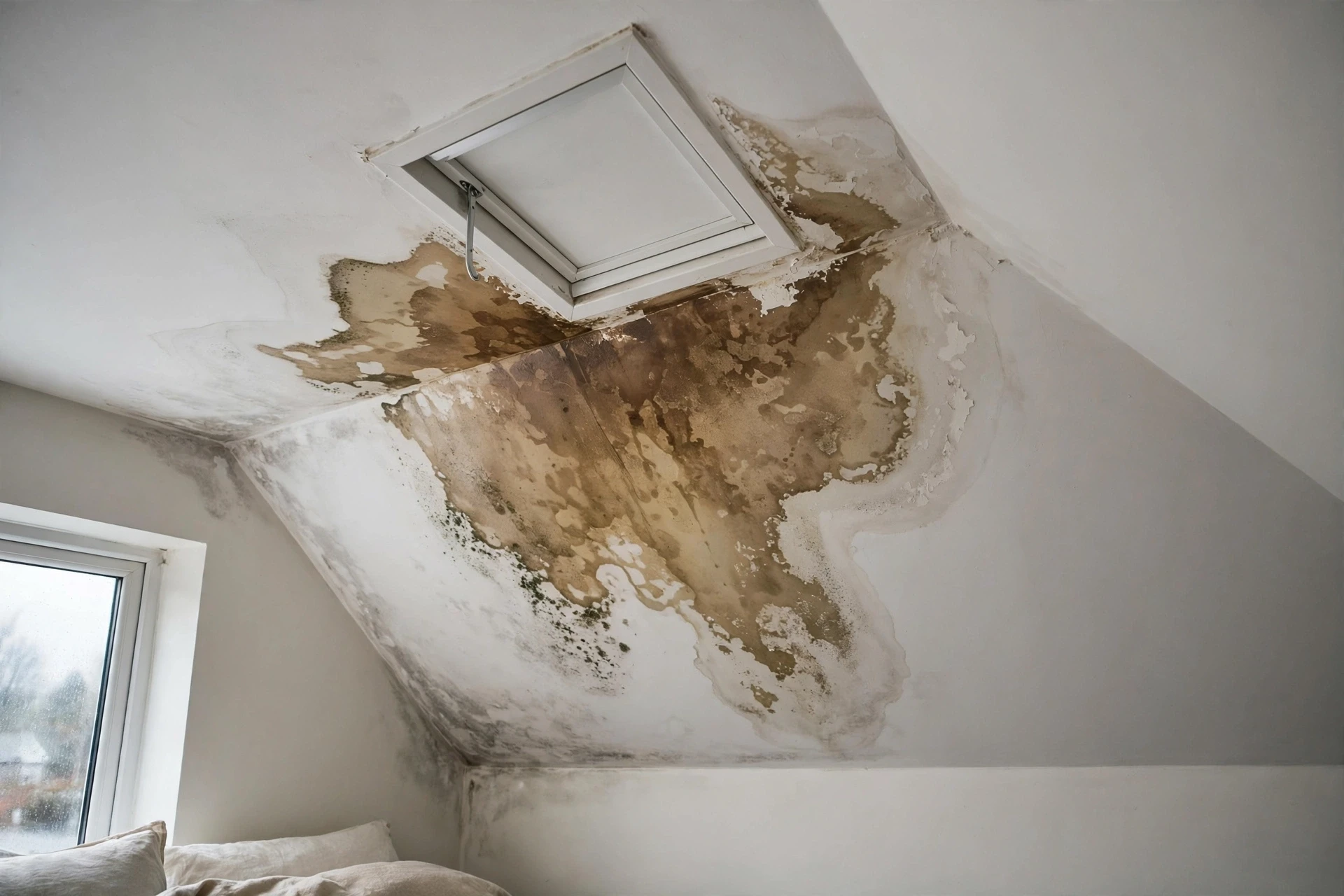
A leaking roof winter problem often shows up indoors first. Look for these signs:
- Yellow-brown stains or rings on ceilings
- Damp patches on walls, especially after rain
- Peeling paint or bubbling plaster near the eaves
- A musty smell or black mould in corners
- Daylight showing through the roof in the loft
Ceiling Stains, Damp Patches and Mould
Check the ceilings below bathrooms and above any sloping roof. A stain that grows after heavy rain usually means water is getting in above. Keep an eye on upstairs corners too, where damp often collects first.
Loft and Attic Checks
Pop into the loft with a torch after a storm. Look for wet or darkened timbers, damp insulation, water marks on the underside of the roof and daylight at joints. In exposed spots around Wareham and Swanage, wind-driven rain can push through small gaps that a dry-day check would miss. If you spot sagging on the roof deck, get it looked at quickly. If you find mould on timbers, we can trace the cause.
Matching the Symptom to the Cause
Where the stain sits is a clue. A patch near a chimney usually points to flashing. Stains in a corner often mean a slipped tile or a blocked gutter overflowing. Water along the eaves suggests a gutter, fascia or soffit problem. Photograph everything, because buildings insurance claims go far more smoothly with dated photos of the damage.
Step 5: Why Small Roof Faults Get Costlier in Winter
Saturated Roofs and Driving Rain
A cracked tile or tired flashing is easy to ignore in July. Winter changes the maths. Storms off the Channel hit Wareham and Swanage with wind-driven rain, which pushes water sideways under slipped tiles and into gaps a summer shower would never reach. Once the felt and battens get soaked, the damage spreads well past the original fault. That is why a leak on a storm damaged roof in December often becomes a bigger job by February.
Freeze-Thaw, Ice and Unsafe Working Conditions
Cold weather adds a second problem. Water that has crept into a hairline crack freezes, expands and widens it, so one slipped tile can loosen its neighbours over a few frosty nights. Frozen felt and iced-up gutters also make a roof more fragile to walk on. That is why roof repairs in Swanage and the wider area are best sorted before the hard frosts, not attempted from a ladder in a winter gale.
Step 6: What to Do Next and When to Call a Roofer in Purbeck
Call a roofer after a storm if you spot any of the following:
- Slipped or missing tiles, or a cracked ridge tile
- Damaged flashing around a chimney or valley
- A new damp patch or stain on a ceiling
- Guttering hanging loose or pulling away
- Anything that looks like a sagging roof deck
Until then, work from the ground.
What You Can Safely Do Yourself
Use binoculars or your phone’s zoom to check tiles, flashings and gutters from ground level. Look inside at ceilings, walls and the loft for damp patches or daylight coming through. Photograph anything you find so you can compare after the next storm.
When It Needs a Professional Roofer
Anything on the roof itself needs a trained roofer with the right access and safety kit. In exposed Purbeck spots such as Swanage and Wareham, wind-driven rain finds every small gap, so small faults grow quickly. Storm damage involving slate, tile, flashing or a flat roof should never become a do-it-yourself job.
Documenting Damage and Getting a Quote
Keep dated photos and notes together for buildings insurance documentation. Then ask for a clear written quote covering the make-safe repairs and the full fix. For roof repairs Dorset homeowners can rely on, we are happy to inspect and quote.

Spotted a slipped tile or a damp patch after the storm? MNM Building Services can inspect and repair your roof before winter weather makes it worse. Get in touch for a free quote.
Frequently Asked Questions
Q1: How do I check my roof for storm damage?
Stay on the ground and walk right round the house. Use binoculars or your phone’s zoom to look for slipped tiles, uneven ridge lines, lifted flashing and sagging gutters, then photograph anything unusual.
Q2: What are the signs of a leaking roof?
Watch for yellow-brown ceiling stains, damp patches after rain, peeling paint near the eaves, musty smells and daylight in the loft. A patch near the chimney often points to flashing rather than tiles.
Q3: Should I repair slipped tiles myself?
No. Wet or loose tiles give no grip, and freeze-thaw makes roofs fragile in winter. Stay off the roof entirely and call a roofer with proper access equipment and safety kit.
Q4: Who can repair a roof in Dorset?
Look for an established local firm with clear written quotes. MNM Building Services inspects and repairs roofs across Poole, Wareham, Swanage and the wider Purbeck area, covering tiles, flashing, ridge tiles and flat roofs.
Q5: When should I call a roofer after a storm?
Call promptly if you spot missing tiles, damaged flashing, a new damp patch, loose guttering or any sagging on the roof deck. Booking repairs before the next gale stops small faults spreading.
Conclusion
A winter roof check comes down to three habits: stay on the ground, use binoculars or your phone’s zoom, and look indoors as well as up. Slipped roof tiles, tired flashing and blocked gutters all show themselves from ground level, and the loft tells you the rest. In exposed spots like Wareham and Swanage, wind-driven rain turns small faults into big ones fast. If something looks wrong, sort it before the next gale. For roof repairs Dorset homeowners can count on, our roofing services cover tiles, ridge lines, flashing and flat roofs.