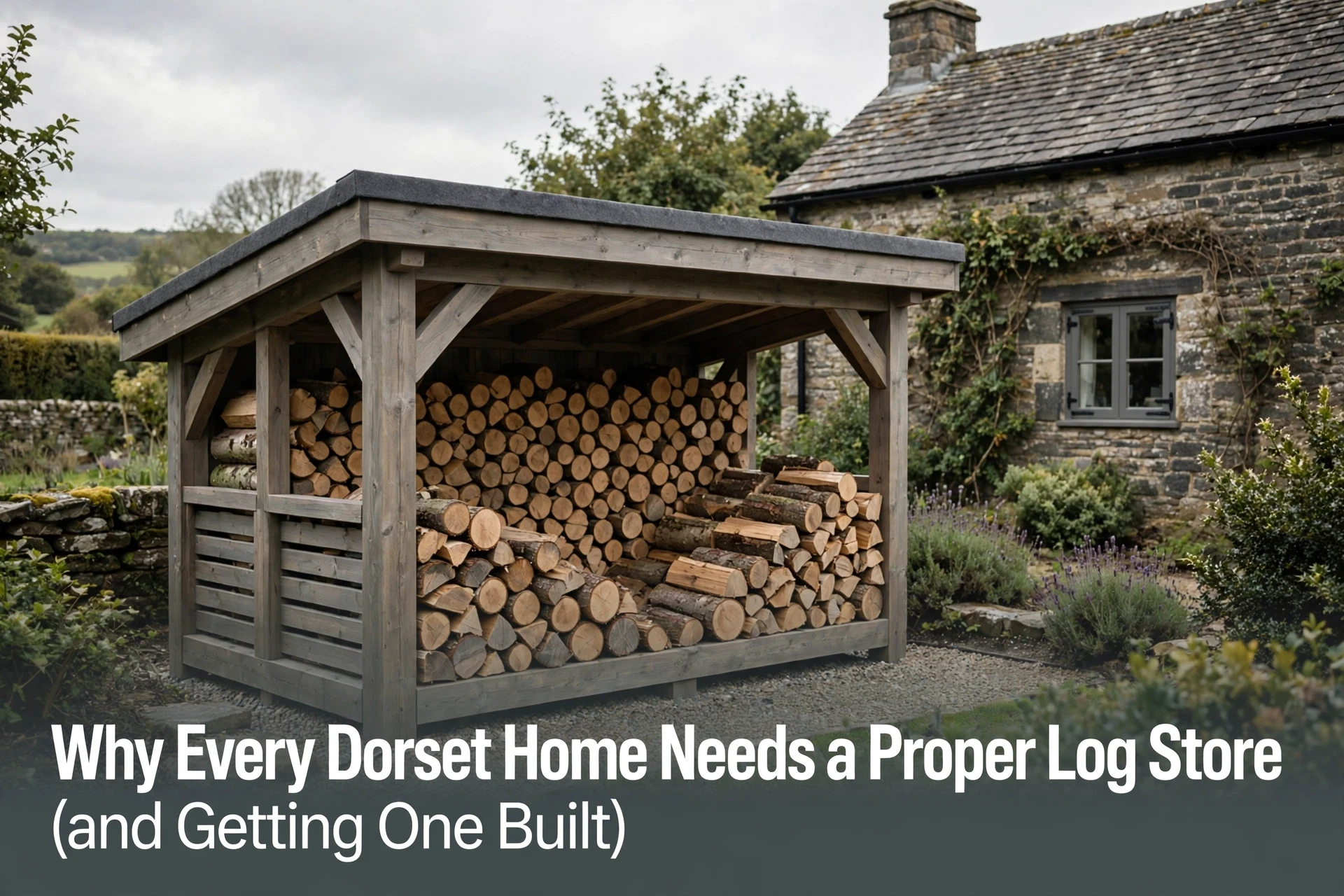
Quick Summary: A good log store keeps firewood off damp ground, covers it with a sloping roof, and leaves the sides open so air can season the wood below 20% moisture. Size the store for your winter use and add about 20% spare capacity. MNM Building Services builds bespoke timber or brick stores across Dorset, including Wareham, Swanage and Purbeck, designed around local wind conditions and garden layouts.
By October the woodshed is usually full. By January, too often, the same logs are wet through, heavy with sap and smoking up the flue every time the stove door opens. It is a problem we see in gardens from Wareham to Swanage every autumn, and the cause is rarely the wood itself. It is the store.
A good log store keeps rain off, lets air move through the stack and holds the timber clear of damp ground. Get those three things right and you can season firewood properly, so it burns hotter and cleaner all winter.
In this guide we explain what makes a log store work, how to size one, and what to think about if you want to build a log store in Dorset. As a local building team, we also design and build bespoke log stores to suit any garden.
Why a Proper Log Store Beats a Pile of Tarpaulin
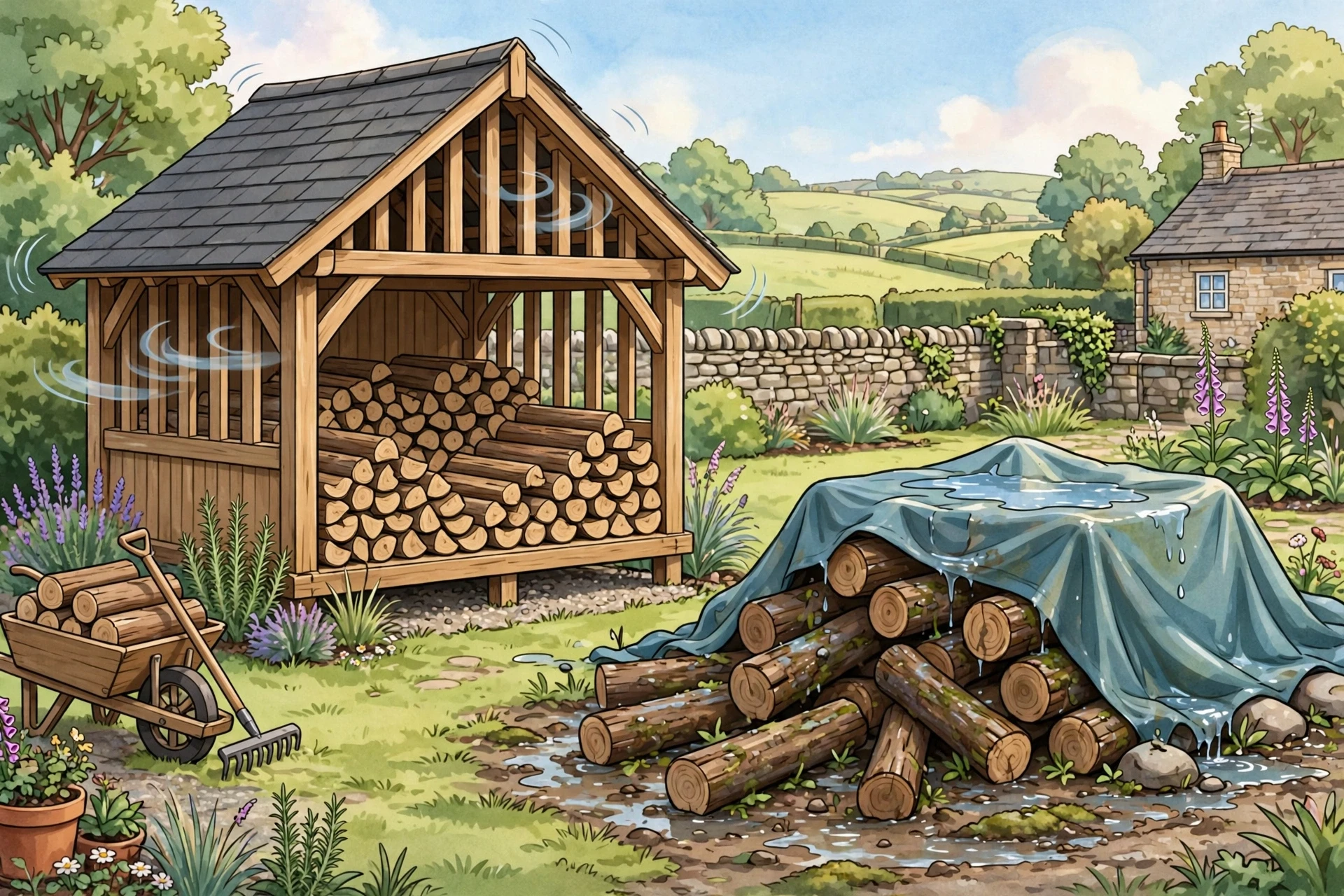
Why do you need a log store? Because damp logs waste money, clog your flue and leave your stove smoking. A good store follows three simple rules: keep logs off the ground, keep the rain off the top, and leave the sides open so air can move through. A pile under tarpaulin usually breaks all three.
Airflow is what actually dries your wood
Freshly cut timber holds a lot of water, and it only seasons properly if air can reach every log. Wind moving through the stack carries moisture away. When you season firewood properly, you want gaps between logs, slatted sides and a raised base so damp air doesn’t pool underneath. A tarpaulin wrapped tight around a pile traps humidity instead, so wood stays wet and grows mould. If you’re planning to build a log store, open sides matter more than anything else, and that’s the same principle we apply on every log store Dorset homeowners ask us about.
Why dry wood burns cleaner and hotter
Well-seasoned logs sit below 20% moisture, which is the level the official Ready to Burn rules treat as suitable. Dry wood catches easily, burns hotter and leaves far less tar in your chimney. Wet logs waste heat boiling off water instead of warming the room, so you burn more for less. Whether you want a compact log shed or a larger wood store for the garden, the payoff is the same: a warmer house and a cleaner flue.
What Makes a Log Store Work: Air, Roof and Ground Contact
If you want to season firewood properly, follow these rules: keep logs on a raised base off the ground, stack them with gaps for airflow, keep a solid sloping roof on top, and put the closed back of the store towards the prevailing south-westerly weather so wind passes through the slatted sides without driving rain into the stack. Logs are ready to burn once their moisture content drops below 20%.
Keep the logs off the ground
Ground contact undoes good storage. Damp soil wicks moisture back into the bottom rows, and those logs grow mould or rot long before you burn them. So build a log store with a raised floor of slats, gravel or paving slabs, with a small gap underneath for air to move.
The base also helps drainage. Rain splashes and standing water settle around any store, so a few inches of height keeps the lowest logs clear. In damp Purbeck and Wareham gardens, that raised base matters more than people expect.

A roof on top, open sides, and the prevailing wind
Rain falling straight onto a stack keeps wood wet, so the roof should slope to throw water off, with a slight overhang. The sides stay open: slatted boards let wind pass through and carry moisture away. In Dorset, weather mostly arrives from the south-west, so set the store with its back to that weather and the loading face sheltered, and your logs stay drier while the breeze still does its work. That is the core of any good log store Dorset homeowners can rely on, and we build to these rules on every job.
Sizing Your Log Store for a Season’s Burning
How big should a log store be? Work it out in four steps: note how many logs you burn in a week, multiply that across your burning months, convert the total into stacked volume, then add space for airflow around every log.
Roughing out a season’s worth of wood
How much you burn depends on your stove, your house and how often the fire is lit. A Purbeck cottage lit every evening from October to March gets through far more than a Wareham home burning only at weekends. If you buy by the load or the net, count how many you use in a typical week and multiply up, and ask your supplier what volume a load represents. Whatever your figure, it pays to size a log store generously, because wet winters go through wood faster than you expect.
Allowing for the space the wood actually takes
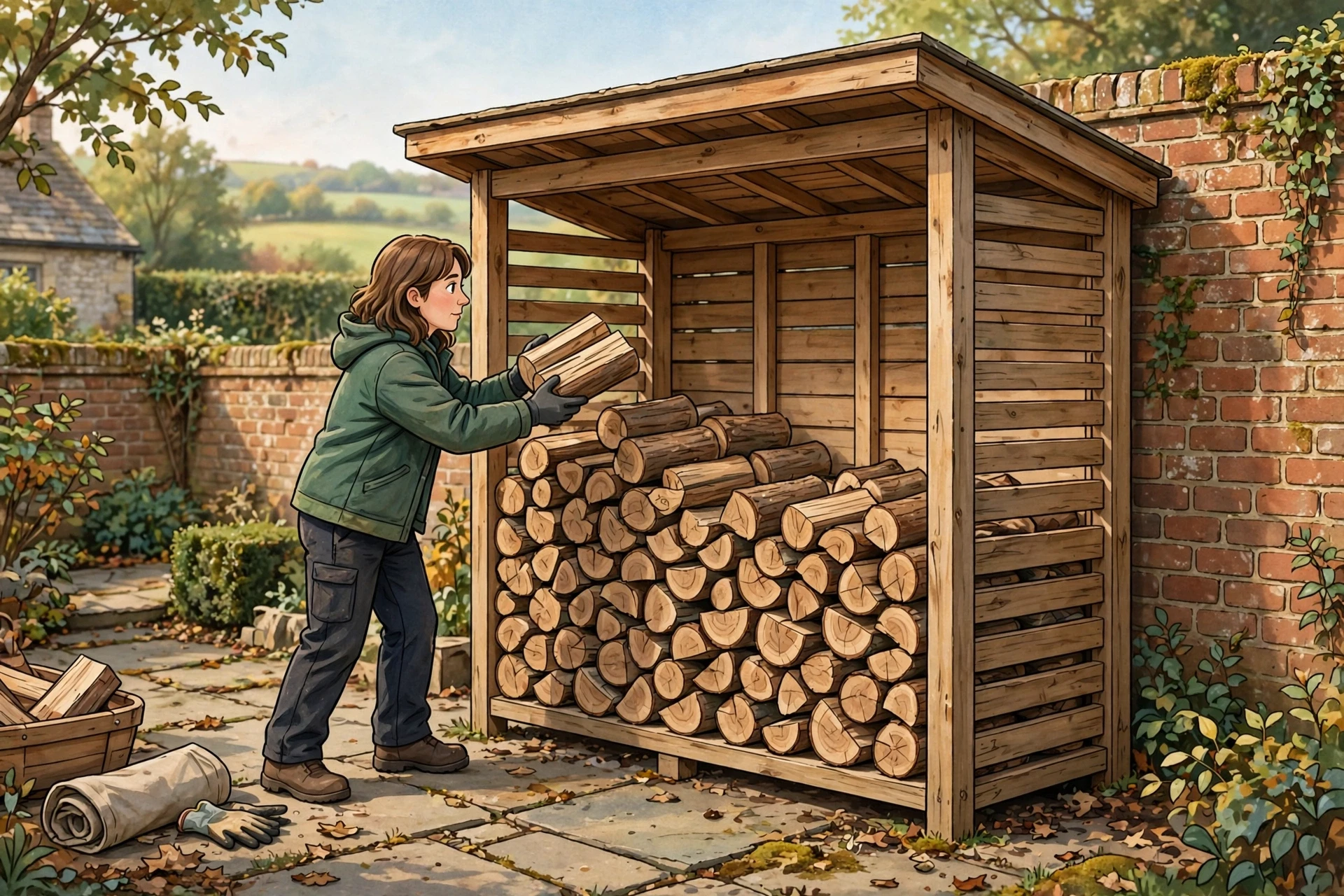
Stacked logs leave gaps, but the true allowance is bigger than that. Aim for roughly twenty per cent spare capacity above your season’s volume, so air moves between rows and you still have room after a top-up delivery. Never fill the store to the roof; logs need ventilation, not a tight squeeze. If you would rather not work the sums out yourself, we build bespoke log stores to suit any garden, sized around how you actually burn.
Materials, Finishes and Fitting a Log Store to Your Garden
Timber, metal or brick
Timber is the usual choice. It’s affordable, easy to work with and suits most Dorset gardens, though it needs regular treatment to cope with our damp coastal air. Metal stores are slim and low maintenance but can drip condensation onto the logs below. Brick is the most durable option and, once built, needs almost no upkeep. If you’d rather have something solid, our bricklaying team can build a store that matches your garden wall.
Siting, foundations and consent
Where the store goes matters as much as what it’s made from. Most modest log stores count as outbuildings, so they usually fall under permitted development and don’t need planning permission, provided they meet height and position limits. Your local authority or the Planning Portal can confirm before you build. Set the store on a level, well-drained base – paving slabs on compacted hardcore work well – and leave a clear approach so you can load it easily through a wet Purbeck winter.
Having a Bespoke Log Store Built in Dorset
Why bespoke beats a flat-pack
Flat-pack stores come in fixed sizes, so they rarely fit an awkward corner, a narrow side passage or a Purbeck garden wall line. They often skimp on the two things that matter most: a solid raised base and enough airflow behind and between the logs. A bespoke build lets you match the store to your stack, your stonework and the prevailing south-westerly wind, so the whole thing works instead of just standing there. If your garden has brick walls or stone features worth protecting, it’s worth seeing how our brickwork in Swanage and across Purbeck is finished, because the same care goes into a store.
How our builds work
We start with a quick chat about how much wood you burn and where the store will sit. Then we agree a design: open front, sloped roof, gaps for air and a raised floor that keeps damp away. Stores can be built in timber, with brick sides as an option. From Purbeck to Wareham and Swanage, we build to suit your space, so just get in touch for a quote.
Common Mistakes to Avoid
Logs on the ground, sides sealed up, roof flat
Most log store problems come down to three easy fixes. First, never stack logs straight onto soil or grass. Ground moisture creeps up into the bottom layer, so keep a raised base off the ground, even a simple gravel bed or old pallets. Second, resist wrapping the store in solid boards or sheeting to keep rain out. Without airflow the timber cannot season properly, and logs that never get below that 20% moisture target will smoke and tar up your stove. Third, a flat roof pools water. Give it a slope so rain runs off. A well-built bespoke log store solves all three at once.
Damp logs smoke, tar up your stove and waste heat. A well-built store fixes that. MNM Building Services builds bespoke log stores across Dorset, Purbeck, Wareham and Swanage. Ask us for a friendly, no-pressure quote at MNM Building Services.
Frequently Asked Questions
Q1: Why do I need a log store?
A proper store keeps rain off, lifts logs clear of damp ground and lets air move through the stack. That’s what seasons wood properly, so it burns hotter and leaves less tar in your flue.
Q2: How big should a log store be?
Work out how much you burn in a typical week, multiply that across your burning months, then allow roughly twenty per cent spare capacity so air still moves between rows.
Q3: How do I store logs so they season properly?
Stack them with gaps on a raised base, roof the top, leave the sides open and keep the closed back of the store towards the prevailing south-westerly weather.
Q4: Who can build a bespoke log store in Dorset?
We build bespoke log stores to any size across Dorset, Purbeck, Wareham and Swanage, matched to your garden and how you burn.
Q5: Do I need planning permission for a log store?
Most modest stores fall under permitted development as outbuildings, provided they meet height and position limits. Check with your local authority or the Planning Portal first.
Conclusion
A good log store comes down to three things: airflow, a solid roof and a raised base off the ground. Turn its back to the prevailing south-westerly weather, size it for a season with a little spare, and your logs will season properly, burning hotter with less tar in the flue. Timber, metal and brick all work, and most modest stores need no planning permission. A bespoke build simply makes those rules fit your garden, whether that is a snug Purbeck corner or a wide Wareham drive. As a local firm covering Poole and the surrounding areas, we build stores to any size, matched to how you actually burn.