
Quick Summary: Cracked or hollow render in Dorset should be inspected in winter, especially where wind-driven rain and freeze-thaw damage worsen problems. Small, isolated defects can be patched, but widespread hollow areas or recurring damp usually require a full re-render to restore grip and weather protection. Winter suits inspection, sealing gaps and clearing gutters, while spring or early autumn provides the mild, dry conditions needed for new render to cure properly.
A hairline crack on a sheltered wall in Wareham may be nothing to worry about. On a seafront wall in Swanage, where winter wind drives rain straight into the external wall render, that same crack can become damp render and a bigger job within a season. As a Poole firm, we handle rendering Dorset homes trust in exposed coastal weather, from cracked render repair to full house rendering. We will help you judge whether a small render repair will do, or whether it is time to re-render house walls properly – so you can inspect now and book a renderer Purbeck and Dorset homeowners rely on for the milder spring window.
Why Render Cracks and Where Damp Gets In
Render rarely fails for one reason. Most cracked render we see around Poole and Purbeck comes down to weather, movement or the way the wall was prepared in the first place.
- Freeze-thaw damage: water soaks in, freezes, expands and pushes the surface off
- Wind-driven rain: exposed coastal walls take the worst of the weather
- Movement and settlement: the wall shifts, the render does not
- Poor preparation: weak bonding or badly mixed rendering
Frost, Wind-Driven Rain and Exposed Coastal Walls
Houses rendering the seafront in Swanage or Wareham take a beating. Rain soaks into hairline cracks, then frost expands the water and blows the render loose. Salt spray makes it worse. It is the classic coastal cycle behind most house rendering problems here.
Movement, Settlement and Poor Preparation
Walls move as the ground settles, and rigid render cannot flex, so it cracks along the stress lines. Sometimes the fault lies underneath. Old mortar joints breaking down, or a wall rendered over dust and loose paint, will drag the finish off with it. Cracked render repair that ignores the cause rarely lasts.
Reading the Signs: Cracks, Hollow Patches and Internal Damp
Tap the wall. A hollow, drum-like sound means the render has lost its grip. Look for hairline cracks, bulges or stains, then check inside for damp patches, peeling wallpaper or a musty smell. Damp render on the outside often shows up as a cold, wet corner on the inside first.
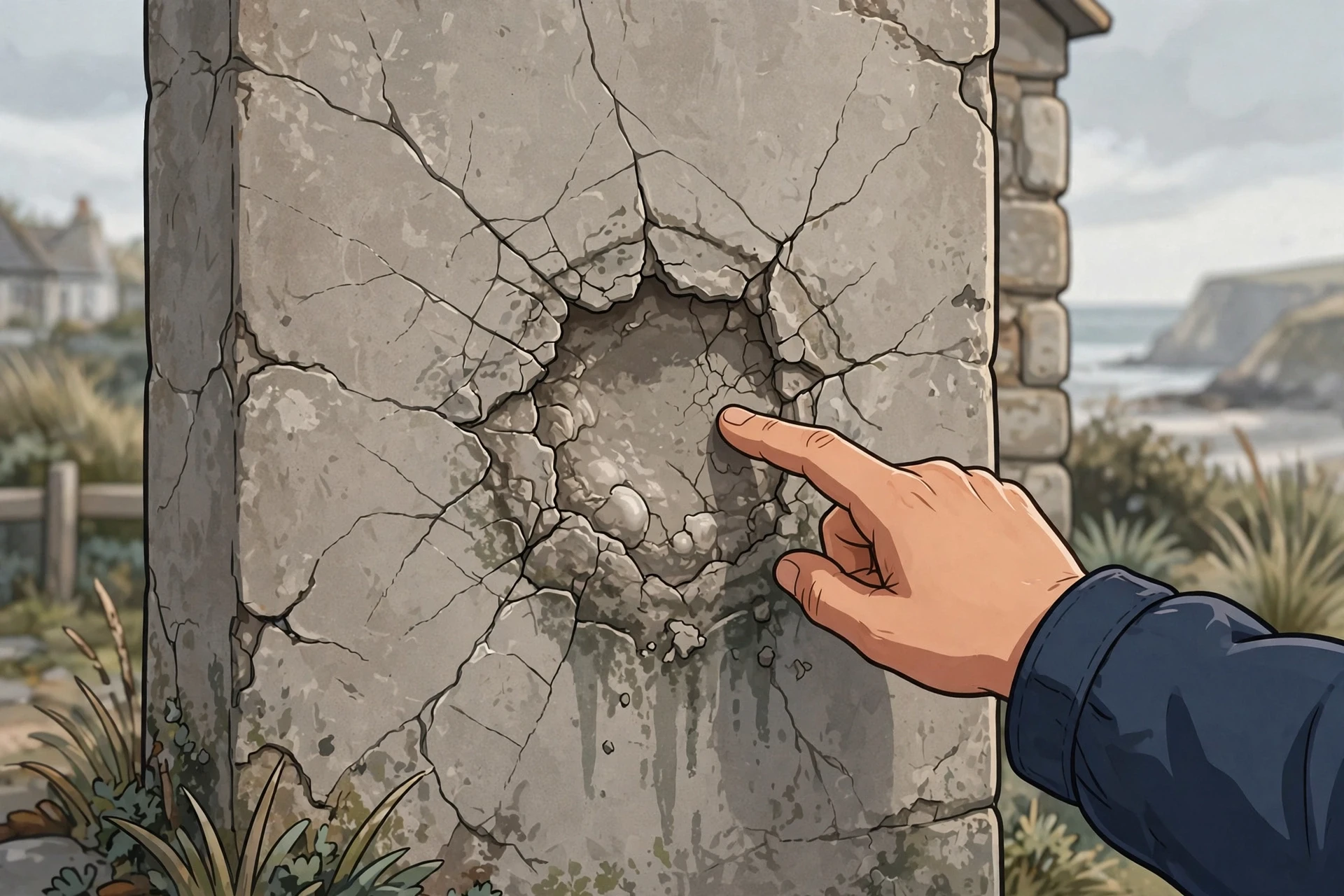
If you are unsure what you are looking at, a quick survey from a local firm like MNM Building Services will tell you whether you need a small patch or a full re-render.
Repair or Full Re-Render: How to Decide
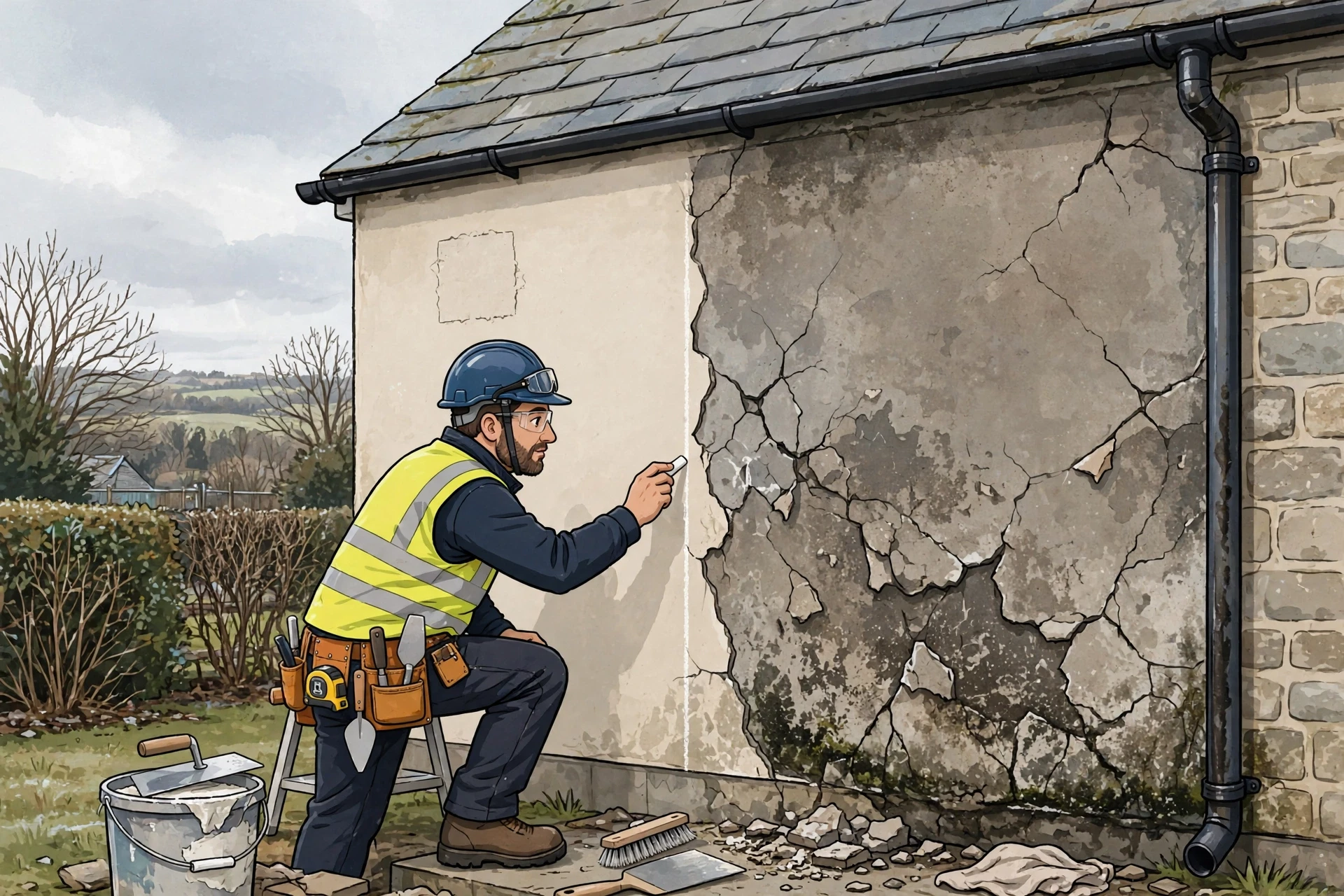
Can render be patched, or does the wall need stripping back? If the damage is local and the rest of the wall is sound, a cracked render repair will do. If large areas sound hollow or damp keeps returning, a full re-render is the better long-term fix.
When a Repair Is the Right Answer
Small cracks, one hollow patch or a chip by a downpipe usually need patching, not replacing. If the render below is firmly stuck to the wall, we can cut out the loose area and blend in fresh mortar. House rendering often survives decades with occasional small repairs like these.
When a Full Re-Render Is Worth It
When whole walls sound drummy, cracks keep reopening, or damp patches spread inside, the render has lost its grip and its weatherproofing. Patches would simply fail next to failing areas. For rendering Dorset homes with exposed coastal weather, stripping back and re-rendering gives a sound, sealed finish.
Why Winter Is for Inspections and Repairs, Not Full Re-Rendering
A new coat of render needs mild, dry, frost-free weather, so spring and early autumn suit rendering Dorset walls best. Winter damp and frost stop fresh render from curing properly.
What Can Be Done in Winter
You can still inspect walls for cracks and hollow patches, book a spring slot, and carry out small repairs such as sealing gaps or clearing gutters.
Why Spring Is the Better Time for a New Coat
Once temperatures rise and drying days return, a full re-render bonds and cures as it should. Booking now means your home is ready when the weather turns, and our team can plan the work around you.
What a Fresh Coat of Render Gives Your Home
Weatherproofing, Appearance and Kerb Appeal
New external wall render does three jobs at once. It sheds the rain that drives in off the Purbeck coast, covers old cracks and patchy repairs, and gives the whole house a cleaner, brighter look. A fresh, even finish also helps the walls breathe properly, so moisture escapes instead of sitting behind the surface. For homes in Wareham, Swanage and along the coast, that added weather protection is worth having before another wet winter.
Planning Your Next Step
Winter is the time to inspect and plan. Render needs mild, dry, frost-free weather to cure well, so book now and the work can start in spring when conditions are right.

Spotted cracks or damp patches on your render? Get it checked this winter and book spring work early. MNM Building Services offers friendly, honest quotes across Poole and Purbeck. Get in touch today.
Frequently Asked Questions
Q1: Why is my render cracking?
Freeze-thaw damage, wind-driven rain, wall movement and poor preparation are the usual causes. On exposed coastal walls, water soaks into hairline cracks, then frost expands it and blows the render loose.
Q2: Can render be repaired or does it need replacing?
If the damage is small and the rest sounds solid, patching works. If large areas sound hollow or damp keeps returning, a full re-render is the lasting fix.
Q3: When is the best time of year to render a house?
Spring and early autumn suit rendering best. New render needs mild, dry, frost-free weather to cure properly, so inspect in winter and book your spring slot early.
Q4: What does hollow-sounding render mean?
A drum-like sound when you tap the wall means the render has lost its grip. That area will eventually crack or fall away, so get it checked soon.
Conclusion
Cracked or damp render usually starts small, so winter is the time to find it. Tap walls for hollow patches, watch inside for damp, and decide between a patch and a full re-render house walls need before spring. For rendering Dorset homes face against coastal weather, a fresh external coat keeps the rain out and looks sharper. Inspect now, book early, and your walls will be ready when milder weather arrives.